
4-Day Da Nang Itinerary for Families
Four days is enough for a family to experience Da Nang without turning every morning into an early start and every afternoon into a race between attractions.
A practical 4-day Da Nang itinerary for families should balance sightseeing with beach time, meals, rest and enough flexibility for children and grandparents to move at different speeds.
A good framework is:
- Day 1: Arrival, My Khe Beach and An Thuong
- Day 2: Son Tra Peninsula and central Da Nang
- Day 3: Marble Mountains, with Hoi An as an optional extension
- Day 4: Flexible family time, shopping, beach or an indoor activity
The goal is not to see everything in four days. It is to choose activities that work together geographically and leave enough room for a real family holiday.
4-Day Da Nang Family Itinerary at a Glance

| Day | Morning | Afternoon | Evening | Family Planning Focus |
|---|---|---|---|---|
| Day 1 | Arrival and settle in | My Khe Beach | An Thuong and easy dinner | Keep travel day light |
| Day 2 | Son Tra Peninsula | Central Da Nang | Han River area or early dinner | Balance sightseeing and rest |
| Day 3 | Marble Mountains | Da Nang or optional Hoi An | Flexible evening | Consider mobility and energy |
| Day 4 | Beach, museum or shopping | Free time and packing | Departure or final meal | Avoid a rushed final day |
For families with toddlers, older relatives or several households travelling together, the same itinerary can be slowed down further.
There is no reason every person needs to participate in every activity.
Before You Start: Plan Around Energy, Not Just Distance
Family travel usually takes longer than a map suggests.
A short journey can still involve getting children ready, waiting for relatives, arranging several vehicles, finding toilets, stopping for snacks and regrouping after an attraction.
Instead of planning every hour, divide the day into broad blocks:
Morning → lunch → afternoon → dinner or evening
One useful principle for a multigenerational trip is to plan around energy levels, not just distances.
A young child, a teenager and a grandparent may all enjoy the same destination while needing very different amounts of walking and rest.
For a larger family, it also helps to nominate one person as the day’s coordinator. That person can keep transport details, restaurant reservations and meeting points in one place.
Day 1: Arrival, My Khe Beach and An Thuong

Keep Day 1 intentionally simple.
Some family members may arrive at different times, children may be tired and older relatives may want to rest before doing anything outdoors.
Arrival and Check-In
Avoid scheduling a major attraction immediately after landing.
Allow enough time for:
- baggage collection;
- transport to the accommodation;
- check-in;
- a first meal;
- showers and changing;
- children to rest;
- later arrivals to join the group.
If several households are travelling together, meeting at the accommodation is often easier than trying to coordinate everybody at the airport.
Once everyone is settled, choose something nearby and flexible.
Spend the Afternoon at My Khe Beach
My Khe Beach works well on arrival day because family members can enjoy it in different ways.
Some may want to swim, while others can walk, sit near the beach or take a break at a café.
Keep the visit dependent on the actual weather and sea conditions. Follow local warnings and instructions rather than assuming swimming will always be suitable.
For younger children, a shorter beach visit may also be more enjoyable than spending several hours in the sun after a travel day.
Explore An Thuong at an Easy Pace
After the beach, stay around the An Thuong and My Khe area rather than adding another cross-city transfer.
Use the time for:
- coffee or juice;
- a short walk;
- buying water or breakfast supplies;
- an easy dinner;
- letting tired family members return early.
The first evening does not need to become one of the trip’s biggest meals.
For a larger family, booking a table in advance can still make dinner easier when everyone wants to sit together.
Day 2: Son Tra Peninsula and Central Da Nang
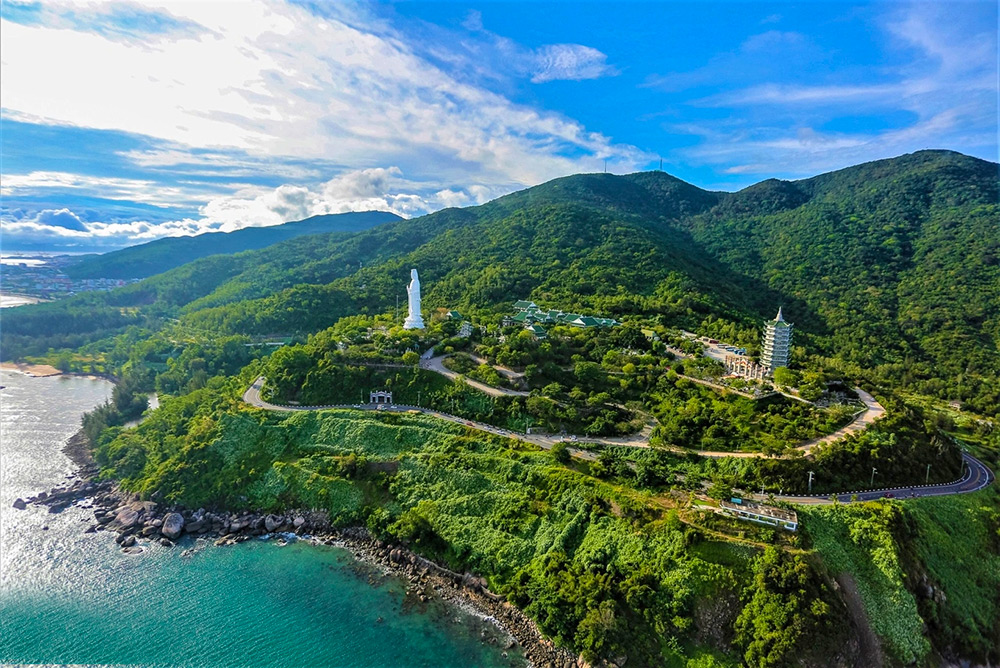
Day 2 can be one of the fuller sightseeing days.
A practical sequence is:
Son Tra Peninsula → lunch and rest → one central Da Nang activity → optional evening by the river
Morning: Son Tra Peninsula
Start in the morning while the family still has energy.
Do not try to stop at every viewpoint. For a mixed-age group, choosing a small number of worthwhile stops is usually easier than repeatedly getting in and out of vehicles.
Linh Ung Pagoda can be one of the main stops, followed by another scenic point if access, weather and the group’s energy are suitable.
If grandparents or younger children are travelling with you, discuss the route before setting out. Different stops can involve different amounts of walking.
Let the Family Split When Needed
A multigenerational trip does not require identical participation.
More active family members may want to continue to another viewpoint, while grandparents or younger children may prefer a shorter route and a break.
Agree on a meeting point for lunch and let each smaller group move at a comfortable pace.
This is often easier than forcing the least mobile traveller to follow the most active person all morning.
Lunch and Rest
After Son Tra, use lunch as a reset point.
Give everyone time for food, drinks, toilets, air-conditioning and a quick discussion about whether they still want another activity.
A toddler who needs a nap or a grandparent who wants an hour off should be able to skip the afternoon without disrupting everybody else’s plans.
Afternoon: Choose One Central Da Nang Activity
One main activity is enough.
A cultural option is the Museum of Cham Sculpture. Another approach is to keep the afternoon informal with central shopping, a café, riverside time or separate activities for different family members.
For school-age children and teenagers, some unstructured time can be more welcome than adding another formal attraction.
Evening: Keep It Optional
If the family still has energy, the Han River area can work for an evening walk or another short outing.
Families with young children may prefer an earlier dinner and a quieter evening.
Do not keep tired children awake simply because another attraction fits on the itinerary.
Day 3: Marble Mountains and Optional Hoi An

Day 3 can involve more walking, so put the main activity in the morning.
Visit Marble Mountains in the Morning
Marble Mountains includes caves, pagodas, viewpoints and routes involving steps and uneven surfaces.
Parents travelling with younger children should consider:
- how much climbing the children can comfortably manage;
- the heat and weather;
- suitable footwear;
- how long the family wants to stay;
- whether everyone needs to follow the same route.
For grandparents or relatives with reduced mobility, available access features do not necessarily make the entire complex step-free.
A practical approach is to agree on a meeting point and allow more active family members to explore farther if necessary.
Decide on Hoi An After Lunch
Have lunch before deciding whether to extend the day.
By then, you will have a much better idea of how the family is feeling.
Continue to Hoi An only if the group still has the energy for a longer afternoon and evening. It can suit families visiting Central Vietnam for the first time and comfortable with additional walking.
Otherwise, return to Da Nang.
A slower afternoon at the accommodation, My Khe Beach, a café or an early dinner can be the better choice after a physically active morning.
Hoi An should be an option, not an obligation.
Day 4: Keep the Final Family Day Flexible

Day 4 works best when it contains choices rather than one fixed route.
The right plan depends on departure time, weather, children’s energy and anything the family missed earlier.
Option 1: Another My Khe Beach Morning
If everyone enjoyed the beach on Day 1, there is no reason to replace it with a new attraction simply for variety.
A relaxed second beach visit may be exactly what the family wants before departure.
Option 2: Choose an Indoor Cultural Activity
If the weather is poor or the family has had enough sun, choose an indoor activity.
A shorter museum visit can work especially well for families who want some cultural sightseeing without committing most of the day.
Option 3: Food, Markets and Shopping
The final day can also be useful for:
- buying souvenirs;
- picking up snacks;
- visiting a market;
- returning to a favourite café;
- having one last family meal.
This gives different family members some independence without creating complicated logistics.
Option 4: Do Nothing for a While
Rest is valid itinerary time.
Children may want to play, adults may want coffee and grandparents may appreciate a morning without another transfer.
A family holiday should include some hours when nobody is trying to reach an attraction.
Leave a Departure Buffer
Avoid placing a demanding or distant activity immediately before an airport transfer.
Families still need time for packing, checking rooms, finding children’s belongings, eating, loading bags and getting everyone into the correct vehicle.
The final day is one place where extra buffer is almost always useful.
How to Get Around Da Nang as a Family Group

The right transport depends on both group size and the type of day you are planning.
| Transport | Best For | Family Advantage | Main Limitation |
| Taxi or ride-hailing car | Short city trips | Flexible and easy to arrange | Large groups may need several vehicles |
| Larger private car | Medium-size family | Keeps more people together | Luggage reduces usable space |
| Pre-arranged van | Full sightseeing day | Easier group coordination | Requires advance planning |
| Walking | Beach and compact neighbourhoods | No pickup coordination | Heat, rain and mobility can limit it |
For eight to fifteen travellers, repeatedly arranging several cars can become tiring.
One vehicle may arrive before another, people may be dropped at different entrances and bags or children can end up split across several cars.
For a full sightseeing day, compare the convenience of several separate rides with one suitably sized pre-arranged vehicle.
If travelling with infants or younger children, confirm any child-seat requirements and availability directly with the transport provider.
How to Keep a Family Itinerary Realistic
A family itinerary often becomes difficult because of too many transitions, not because one attraction takes too long.
A few rules help:
- Put higher-energy sightseeing earlier in the day.
- Do not skip meals simply to protect the schedule.
- Leave at least one flexible period during most days.
- Allow part of the family to skip an activity when needed.
- Avoid stacking several fixed-time activities back to back.
That flexible period can become a nap, café break, pool time, shopping stop or simply extra time at an attraction the family is enjoying.
The objective is to spend meaningful time together, not to keep every traveller on exactly the same schedule.
Adjust the Pace for Different Ages

Different ages create different itinerary needs.
Toddlers and Preschool Children
Prioritise shorter activity blocks, naps, shade, easy meals and fewer transfers.
A beach visit followed by an early dinner may already be a full afternoon.
School-Age Children
They may be comfortable with longer sightseeing periods but still benefit from predictable meal times and breaks between cultural attractions.
Teenagers
Teenagers may appreciate more independence.
One practical compromise is family sightseeing in the morning, followed by beach, café or shopping time before everyone meets again for dinner.
The same itinerary does not need to feel identical for every age group.
How to Plan Meals for a Family Group
Meals deserve some planning, especially when several households are travelling together.
Breakfast
Avoid requiring everybody to eat at exactly the same time unless transport depends on an early departure.
Lunch
On sightseeing days, choose somewhere that fits the route instead of crossing Da Nang purely for one restaurant.
Lunch can also serve as a useful checkpoint for deciding whether the family still wants the afternoon activity.
Dinner
Dinner is often the easiest meal for everyone to slow down and eat together.
For larger groups, a reservation can help when sitting together matters or when the family has specific dietary requirements.
Do not assume restaurants provide high chairs, children’s menus or specialist allergy procedures unless these have been confirmed.
What If It Rains During Your Four Days?

Do not force an outdoor activity simply because it appears on a particular day of the itinerary.
A rainy morning can become a museum visit, café time, shopping, a longer lunch or accommodation downtime.
Then move the missed outdoor activity into a flexible period later in the trip if conditions improve.
For more backup ideas, see our guide to things to do in Da Nang when it rains for families and groups.
Building flexibility into the original itinerary is much easier than trying to repair four completely fixed days.
Is Four Days Enough for Da Nang With Kids?
Yes. Four days gives a family enough time for a balanced introduction to Da Nang without requiring an overloaded schedule.
A practical plan combines My Khe and An Thuong on Day 1, Son Tra on Day 2, Marble Mountains on Day 3 and a flexible final day.
Hoi An can be added when the family wants a longer third day, but it is not necessary for the itinerary to feel complete.
Why One Da Nang Base Can Make Family Travel Easier

Changing accommodation during a four-day family trip creates extra work.
Each move can involve repacking children’s belongings, checking several rooms, moving luggage, arranging transport and completing another check-in.
Using one accommodation base gives the family a predictable place to return to after each day.
It can also make a multigenerational trip easier because one part of the family can return earlier while others continue their plans.
If staying together is important, explore Hanami Villa’s accommodation for families and large groups and compare the confirmed sleeping layout, facilities and policies with your family’s actual needs.
Final Tips for a Four-Day Da Nang Family Trip
The strongest 4-day Da Nang itinerary for families is not the one with the most attractions.
Keep the arrival day easy. Use Day 2 for a fuller Son Tra and city experience. Visit Marble Mountains earlier on Day 3, then decide whether extending the day to Hoi An suits the family.
Leave Day 4 flexible enough to recover an activity affected by weather, return to the beach or simply slow down before departure.
Three principles make the biggest difference:
- Do fewer activities well.
- Allow different generations to move at different speeds.
- Leave unscheduled time for meals, rest and delays.
When your dates and group size are confirmed, check current rates and availability for your Da Nang stay.
Frequently Asked Questions
Do Families Need to Book Da Nang Attractions in Advance?
Not every activity needs to be reserved before the trip. Advance booking is most useful when an attraction, tour or transport service has limited capacity or a fixed entry time, while keeping some activities unbooked gives the family more room to adjust for weather and energy levels.
What Should Families Pack for Four Days in Da Nang?
Pack for both outdoor sightseeing and flexible downtime. Useful items can include comfortable walking shoes, sun protection, light rain protection, refillable water bottles, essential medication and the child-specific items your family would find difficult to replace quickly during the trip.
Da Nang and Hoi An Itinerary: One Base for Groups
[…] that want a slower Da Nang schedule can use the pacing and planning ideas in our 4-Day Da Nang Itinerary for Families when deciding where the Hoi An excursion should […]