Author: hanamivilla

A 24-Hour Villa Staycation in Da Nang: Pool, Sauna, Cinema and More

A villa staycation in Da Nang is a chance to make the accommodation part of the holiday instead of somewhere you only return to after sightseeing. For one afternoon, evening and morning, the plan can be as simple as swimming, slowing down, sharing dinner, watching a film and enjoying the fact that nobody has to organise another trip across the city.

This kind of day works particularly well for families and groups because people can spend time together without having to follow exactly the same schedule. The pool might bring everyone together in the afternoon, while the sauna, hot tub or quiet time indoors allow smaller groups to do their own thing before dinner.

The important part is not trying to use every facility as quickly as possible. A good staycation should feel like a day at the villa, not an amenities checklist.

What Could 24 Hours at the Villa Look Like?

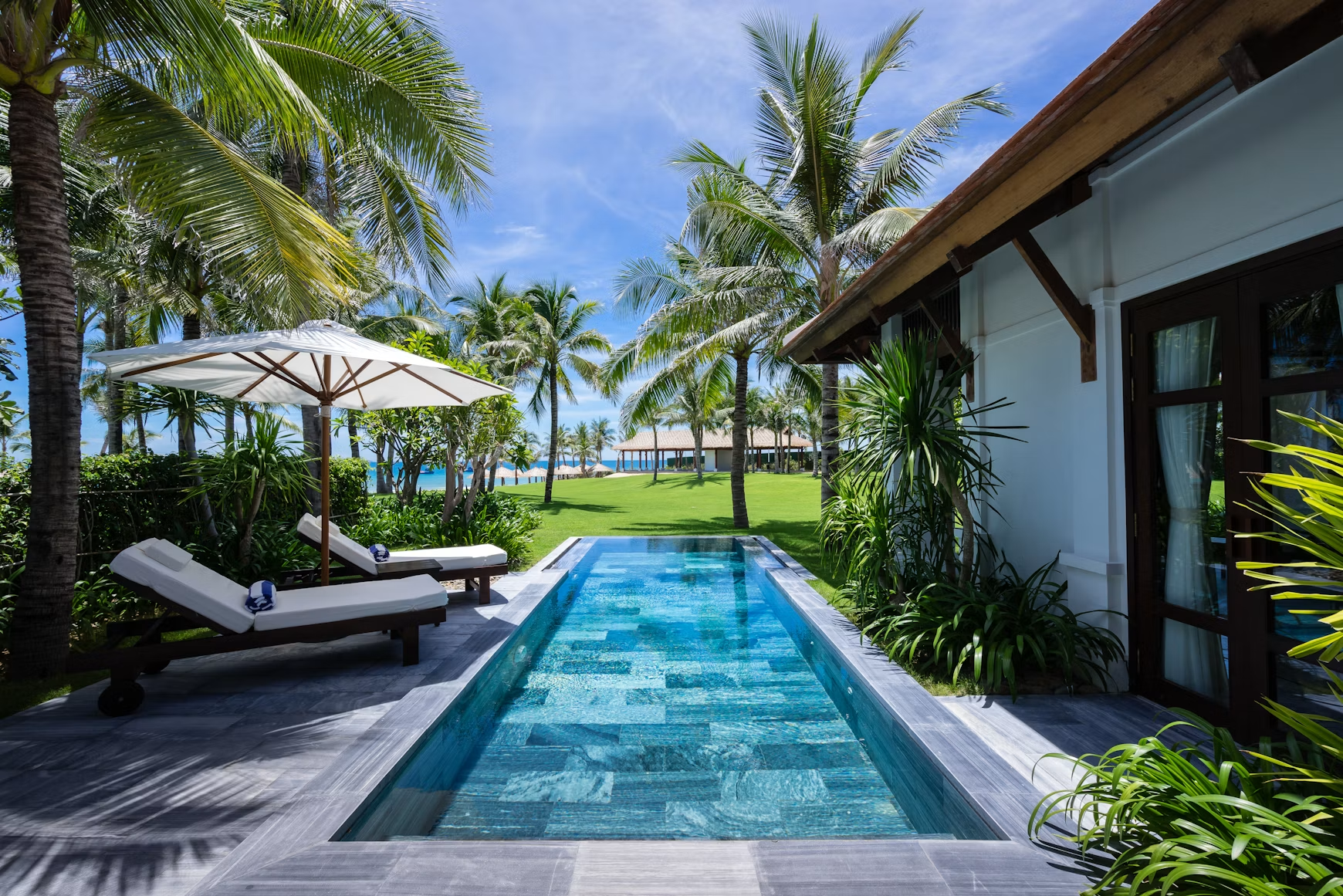
une piscine avec une table et des chaises à côté
A loose villa rhythm lets groups balance pool time, sauna breaks and quiet time indoors

A villa-centred day does not need a minute-by-minute itinerary, but having a loose rhythm makes it easier to picture.

Time A simple staycation rhythm
Early afternoon Arrive, unpack, have a drink and settle in
Mid-afternoon Pool time and snacks
Late afternoon Rest, sauna or hot tub
Early evening Showers, downtime and dinner preparation
Dinner Bring the whole group back together
After dinner Cinema night
Next morning Breakfast, coffee, another swim or a slow start

The times are less important than the sequence. Active time first, slower relaxation later, then a shared evening creates a much more natural flow than moving randomly between facilities.

If you are planning a day like this at Hanami, it makes sense to look through Hanami Villa’s facilities first and decide which parts of the property your group will actually want to use. The swimming pool, hot tub, sauna and cinema can each fit a different part of a slower villa-centred day.

Early Afternoon: Settle In Before You Start Doing Anything

The easiest mistake is treating the staycation like another sightseeing itinerary.

Once everyone is inside the villa, give the group a little time to unpack, change clothes and settle down. Someone who has just arrived may want coffee and a quiet seat, while the children may already be asking when they can swim.

That gap is useful because it lets everyone arrive at the day mentally as well as physically. Instead of announcing a strict programme as soon as the bags are down, let the first shared activity happen naturally.

It is also a good time to put drinks, towels, snacks and anything needed for the afternoon somewhere easy to reach. A small amount of preparation now means fewer interruptions once everyone starts relaxing.

Mid-Afternoon: Let the Pool Become the Social Centre

Une piscine avec des chaises longues et un parasol à côté
The villa pool gives guests room to swim, play or relax together during the afternoon

For most groups, the pool is the easiest place to begin because people do not have to enjoy it in exactly the same way.

Some guests will want to swim properly, children may want to play, and others may be happy sitting nearby with a drink. The result is a shared activity without the pressure of getting ten people to participate at the same level.

Think of the pool as the social centre of the afternoon rather than a scheduled session. People can join, leave, have a snack and return without anyone feeling that they are missing an important part of the itinerary.

If children are swimming, keep supervision clear rather than assuming that somebody in a large group must be watching. Pool Safely guidance recommends designating an adult Water Watcher so responsibility for supervision is explicit rather than shared vaguely across the group.

After swimming, do not rush everyone directly toward the next amenity. Leave time for showers, drinks and a break so the afternoon changes pace naturally.

Late Afternoon: Move from Pool Energy to Sauna or Hot Tub Time

After a lively pool session, late afternoon is a better moment for the day to become quieter.

Some adults may want to spend time in the sauna or hot tub, while children rest, play indoors or spend time with another adult. Not everybody needs to use the same facility, and there is no reason to make the whole group move from pool to sauna to hot tub together.

This is where the villa format becomes useful. People can separate for an hour without actually splitting the group across different parts of Da Nang.

For a multigenerational family, that flexibility matters. Grandparents may prefer a slower afternoon, younger adults may want more time using the leisure facilities, and children may simply want another snack and somewhere comfortable to recover from swimming.

The goal here is not to compare whether the pool, sauna or hot tub is the most valuable amenity. During a staycation, they simply create different moods at different points of the day.

When using a hot tub, follow the property’s current instructions and any health considerations that apply to your group. The CDC’s hot tub guidance is a useful reference if you want additional general advice before using one.

Before Dinner: Give Everyone an Hour With No Plan

une table dressée pour un repas sous un toit pergolé
The hour before dinner leaves space for showers, reading, naps and time without a fixed plan

By late afternoon, the temptation is to keep filling the schedule. This is usually the moment when the day benefits most from doing the opposite.

Leave an hour for people to shower, change, call home, read, take a nap or simply do nothing. Children may need a break after swimming, while adults may appreciate having time that does not require another group decision.

This unstructured period also prevents the villa staycation from feeling like a resort activity programme. Pool time was shared, dinner will be shared, but the space between them can belong to each person.

For larger groups, that matters more than it sounds. People enjoy travelling together more when they are not required to spend every minute together.

Dinner: Make This the Main Group Moment

Dinner is the natural point where everybody comes back together.

After an afternoon in which people may have been swimming, resting or using different facilities, a shared meal gives the day a clear centre. The best approach is usually to keep dinner enjoyable rather than ambitious.

That could mean ordering food, bringing dishes back from nearby restaurants or preparing something straightforward, depending on what works for the group. If your group decides to cook, keeping the meal simple helps dinner remain part of the staycation rather than turning it into another project.

What matters is the atmosphere. With no attraction to rush toward afterward, the group can eat slowly, share dishes and spend more time talking than they might during a normal sightseeing day.

For groups of friends, this is often when the staycation starts to feel less like “staying at the accommodation” and more like part of the trip itself.

After Dinner: Make Cinema Night the Easy Finale

une vue nocturne d’une maison avec piscine et étoiles dans le ciel
Cinema night offers an easy finale with drinks, snacks and no need to leave the villa

After swimming, sauna time and dinner, most groups do not need another energetic activity.

A cinema night works because it asks very little from anybody. There is no transport to arrange, no restaurant reservation to make and no need for everyone to dress and leave again.

Bring drinks or snacks, choose a film and let people settle in. Families may want something that younger guests can enjoy first, while adults or older teenagers can continue later if they want a second movie.

The advantage of cinema time for a group is low-pressure participation. Someone can leave early if they are tired, children can wind down, and people who spent the afternoon differently still finish the day together.

It also creates a natural ending. Instead of asking “what are we doing after dinner?”, the group already knows the evening is staying inside.

What If Not Everyone Wants the Same Staycation?

They probably will not.

A group of ten people may include someone who wants to swim twice, someone who prefers the sauna, a child who wants to watch a film early and another person who would happily spend the afternoon reading.

That is not a planning problem. It is one of the reasons a villa staycation can work well for groups.

Rather than trying to create unanimous participation, choose two or three shared anchors for the day. Pool time, dinner and cinema night might be enough. The rest of the afternoon can remain flexible.

This approach is especially useful for multigenerational families because different age groups rarely have identical energy levels. Everybody can still feel part of the same holiday without being pushed through the same schedule.

Next Morning: Keep One More Part of the Stay Slow

bâtiment en béton brun près du plan d’eau pendant la journée
A slow morning can include another swim, coffee or a meal before sightseeing resumes

The next morning should feel like a continuation of the staycation rather than the beginning of another packed day.

Some guests may want another swim before breakfast. Others may prefer coffee, a slow meal or simply more time getting ready before sightseeing begins again.

If the group has a busy Da Nang itinerary ahead, this is a good moment to enjoy one morning with fewer decisions. Nobody needs to agree on an attraction, organise several vehicles or check a list of tickets before breakfast.

Avoid building the morning around an assumed check-out time. Use the conditions confirmed with your booking and plan the final hours around those details.

Where Should a Villa Staycation Fit Into a Da Nang Trip?

A staycation day is most useful when it gives the wider trip some breathing room.

After arrival can work well if people have reached Da Nang at different times or are tired from travelling. Instead of immediately organising a major outing, the group can settle in and start enjoying the accommodation.

In the middle of the trip is another natural option. After several days of beaches, restaurants, day trips and early starts, a villa-centred day lets people reset without losing an entire day to doing nothing.

It can also work before a busy excursion, when a quiet evening and slower morning are more appealing than adding another attraction to the schedule.

A staycation works best when it complements the rest of the trip rather than replacing everything else you came to Da Nang to experience. If your group is still deciding how to balance sightseeing, meals and slower villa time, our 3-day Da Nang itinerary for friends and large groups provides a broader framework for organising the trip.

A Few Things to Prepare Before Your Staycation Day

Une pièce baignée de soleil avec des fenêtres donnant sur les palmiers et les bâtiments
Preparing swimwear, towels, drinks and snacks helps the villa afternoon run more smoothly

The best staycation feels relaxed partly because the simple logistics have already been handled.

Before the afternoon begins, check that the group has what it needs for the next several hours:

  • Swimwear and towels ready for pool time
  • Drinks and snacks within easy reach
  • A simple dinner plan so nobody has to solve it at the last minute
  • Movie options that work for the people staying
  • Time gaps between activities rather than a full schedule
  • Clear supervision if children are using the pool
  • Any current property instructions for using facilities

This is enough planning to make the day easier without turning it into an itinerary document.

The less time the group spends deciding what comes next, the more the accommodation can actually feel like part of the holiday.

The Point Is to Enjoy the Villa, Not Complete the Schedule

A villa staycation in Da Nang should not feel like a challenge to use the pool, sauna, hot tub and cinema within 24 hours.

A much better rhythm is to start with the pool, let the afternoon slow down, use the quieter facilities when people feel like it, come together again for dinner and finish the evening with a film. The next morning can stay just as simple, with breakfast, coffee or one more swim before the rest of the Da Nang itinerary begins.

For families and larger groups, that mix of shared experiences and personal downtime is what makes a villa-centred day work. People stay connected without needing to make every decision together.

If this is the kind of day you want to build into your trip, check current rates and availability once your travel dates are confirmed.

Frequently Asked Questions

Does a Villa Staycation Need a Detailed Hour-by-Hour Schedule?

No. A few shared activities can give the day some structure while still allowing everyone to relax at their own pace.

What Should a Group Agree on Before a Villa Staycation Begins?

It helps to decide shared meals, grocery purchases and any activities everyone wants to do together. Everything else can remain flexible for travellers who prefer different ways to relax.
How to Plan a Da Nang Trip for 10-15 People

Planning a Da Nang trip for 10-15 people takes more coordination than organizing a holiday for a couple or a small family. Accommodation needs to work for everyone, transport has to account for a larger group and luggage, meal plans become more complicated, and even simple decisions can take longer when several people are involved.

The easiest way to keep a large-group trip manageable is to organize the essentials in the right order: confirm the group, choose suitable accommodation, coordinate transport, build a flexible itinerary, plan shared expenses, and make sure everyone receives the same information before arrival.

Here is a practical way to do it.

1. Confirm Your Group Before Planning the Trip

personnes marchant sur le pont pendant la journée
Hanami Villa group planning begins with confirming the final traveller list and accommodation requirements.

Before choosing restaurants, attractions or day trips, confirm who is actually travelling. For a group of 10-15 people, even one or two changes can affect bedroom requirements, transportation and the total accommodation cost.

Start with a simple group list covering:

  • Full number of travellers
  • Number of adults and children
  • Arrival and departure dates
  • Flight arrival times
  • Room-sharing preferences
  • Mobility or accessibility requirements
  • Dietary requirements
  • Approximate budget per person
  • Activities people consider essential

It also helps to nominate one person as the main group coordinator. This person does not need to organize everything alone, but having one central contact can prevent different members of the group from receiving conflicting booking information.

Create a group planning sheet

A basic planning sheet could include:

Traveller Arrival Departure Room Preference Dietary Needs Notes
Guest 1 Confirmed Confirmed Double room None
Guest 2 Confirmed Confirmed Twin preferred Vegetarian
Guest 3 Pending Confirmed Flexible None Late arrival

You do not need sophisticated travel-planning software. A shared spreadsheet or group document is often enough. The important thing is that everyone is working from the same information.

2. Choose Accommodation That Works for the Entire Group

une vue aérienne d’une plage et d’une ville
Group accommodation planning should account for beds, bathrooms, shared areas and occupancy rules.

Finding accommodation for 10-15 people is not simply a matter of counting bedrooms. A property may have several bedrooms but still not suit your group because of the actual bed configuration, bathroom arrangement, shared areas or occupancy rules.

Before booking, look beyond the advertised bedroom count and check how the property will work for your actual group. Our large-group accommodation checklist covers the key details to review, including bedrooms, bathrooms, kitchen facilities, shared space and guest capacity:

  • Number of bedrooms
  • Actual bed layout
  • Number and location of bathrooms
  • Maximum permitted guest capacity
  • Shared living space
  • Kitchen access
  • Laundry facilities
  • Areas where the whole group can spend time together
  • Check-in and check-out conditions
  • Rates for your actual number of guests

The bed layout is particularly important. For example, six bedrooms do not automatically mean that every possible group of 10-15 people will be comfortable. Couples, children, single adults and multigenerational families can all have different sleeping requirements.

Instead of asking only, “How many bedrooms does the villa have?”, ask: How will our actual group sleep in this property?”

Travellers considering one property for the whole group can review Hanami Villa’s accommodation for families and large groups when comparing their options.

3. Decide Between One Private Villa and Several Hotel Rooms

linge de lit blanc avec coussins décoratifs
Hanami Villa is included in the comparison between one private villa and several hotel rooms for a large group.

One of the biggest decisions for a large group is whether everyone should stay together or book separate hotel rooms. Neither option is automatically better.

A private villa can be useful when your group values:

  • Shared living areas
  • More time together
  • A kitchen
  • Space for group meals
  • Greater privacy as one travelling party
  • A common place to meet before going out
  • Easier coordination between different members of the group

Several hotel rooms may be more suitable when:

  • Travellers want more independence
  • Different people have very different schedules
  • Individual room services are a priority
  • Some members want more separation from the group
  • The party cannot find one property with a suitable layout

Price should also be compared carefully. Do not compare the price of one villa with the price of one hotel room. Compare the total cost required to accommodate the entire group.

You should also consider what is included in each option rather than focusing only on the headline nightly rate.

4. Choose a Location That Makes Group Travel Easier

Location matters more when 10-15 people are travelling together. For one or two travellers, arranging a quick ride across the city may be straightforward. Moving a large group can require several vehicles, more coordination and more waiting.

When choosing where to stay, consider:

  • Access to restaurants
  • Cafes and convenience stores
  • Grocery shopping
  • Beach access
  • Availability of transport
  • Walking convenience
  • Driving time to planned activities
  • Whether members of the group can easily do different things independently

A walkable neighbourhood can give large groups more flexibility, especially when travellers want easy access to cafes, everyday services and the beachfront area near An Thuong without organizing transport for every outing.

Hanami Villa’s location information can help travellers evaluate its position in relation to An Thuong and My Khe Beach using the property’s verified location details.

When checking any accommodation, rely on actual walking or driving times rather than assuming that a short distance on a map will always feel convenient for a group.

5. Plan Airport Transfers Before Arrival Day

Une chambre d’hôtel avec un lit en bois, des coussins turquoise et une vue privée sur le jardin
Airport transfer planning covers arrival flights, luggage volume and vehicle capacity for the group.

Airport transportation deserves more attention when 10-15 people are arriving with luggage.

Before the trip, check:

  • Whether everyone is arriving on the same flight
  • How many pieces of luggage the group will have
  • Whether one vehicle can accommodate the group
  • Whether multiple vehicles need to be coordinated
  • Where everyone should meet
  • Who is responsible for communicating with the driver
  • What happens if one flight is delayed

If the group is arriving on several flights, it may be easier to divide travellers into smaller arrival groups instead of trying to coordinate one large transfer.

The group coordinator should also send the accommodation address and arrival instructions to every traveller before departure. Do not depend on one person’s phone being available after landing.

6. Build a Flexible Da Nang Itinerary

One of the easiest mistakes when planning a large-group holiday is scheduling too much. Everything takes slightly longer with 10-15 people. People wake up at different times, someone may need to return to the accommodation. Restaurant decisions take longer, getting everyone into vehicles takes longer. Different generations may also have different energy levels.

A practical daily structure could look like this:

  • Morning: One main activity.
  • Midday: Lunch and time to rest.
  • Afternoon: One optional activity or free time.
  • Evening: A shared meal, relaxed group activity or independent plans.

This gives the group enough structure without making every hour compulsory. For more inspiration, Vietnam Tourism offers ideas for your Da Nang itinerary, including places to visit and local experiences.

In fact, allowing people to split into smaller groups can make the trip easier. Some travellers may want an active day out, others may prefer the beach, a cafe or time at the villa. Agree in advance which activities are group priorities and which are optional.

7. Do Not Plan Every Meal for 15 People

Assiettes blanches avec des aliments assortis
Meal planning can focus on key group dinners while leaving other meals flexible.

Eating together can be one of the best parts of group travel, but organizing every breakfast, lunch and dinner for 10-15 people can become exhausting. Instead, decide which meals genuinely need group planning.

For example:

  • One or two important group dinners
  • Meals connected with a day trip
  • Breakfast arrangements
  • Meals for travellers with dietary requirements
  • Groceries for shared meals at the accommodation

Check whether restaurants require advance reservations for your party size. Split into smaller groups for easier casual meals. If your chosen accommodation includes a kitchen, ask what cooking and dining facilities are actually available before planning meals around them.

Do not assume that every villa kitchen has the same equipment. For longer stays, it can also be useful to identify nearby places to buy groceries, drinks and other everyday supplies.

8. Separate Shared Costs From Individual Spending

Money can become confusing quickly on a large-group holiday unless everyone agrees on how expenses will be handled. Before travelling, separate expenses into two categories.

Shared expenses

These may include:

  • Accommodation
  • Group transport
  • Groceries
  • Shared tours
  • Group meals everyone has agreed to join
  • Other costs paid on behalf of the full group

Individual expenses

These may include:

  • Personal shopping
  • Drinks
  • Individual activities
  • Separate meals
  • Personal transport
  • Optional services

A simple expense tracker can prevent disagreements later.

Expense Shared or Individual? Paid By Settlement
Accommodation Shared Group leader Split before arrival
Airport transport Shared Traveller A Settle on arrival
Group dinner Shared Traveller B Split after meal
Shopping Individual Each traveller No settlement

Agree on the system before the trip rather than trying to reconstruct every expense at the end.

9. Assign Responsibilities Across the Group

groupe de personnes mangeant à l’intérieur
Sharing booking and coordination duties keeps one traveller from managing the entire trip.

One person should coordinate the overall booking, but one person should not have to organize everything. For a group of 10-15 people, divide a few simple responsibilities.

Accommodation coordinator

Handles:

  • Booking communication
  • Guest numbers
  • Room requirements
  • Check-in information
  • Accommodation payments

Transport coordinator

Handles:

  • Airport transfers
  • Vehicles for planned outings
  • Pickup times
  • Driver communication where applicable

Restaurant coordinator

Handles:

  • Group reservations
  • Dietary requirements
  • Important group meals

Activity coordinator

Handles:

  • Main activities
  • Booking times
  • Tickets where required
  • Meeting points

Expense tracker

Records:

  • Shared payments
  • Who paid
  • How much each traveller owes

These roles do not need to be formal. Their purpose is simply to stop every question being sent to the same person.

10. Confirm Accommodation Costs Before Paying

When booking accommodation for a large group, ask for pricing based on your actual group size, not an estimated number.

Before paying, confirm:

  1. The total accommodation rate
  2. How many guests the rate covers
  3. Whether any extra-guest charge applies
  4. Booking deposit requirements
  5. Security or damage deposit requirements, if applicable
  6. Any relevant surcharges
  7. Services included in the quoted price
  8. Check-in and check-out arrangements
  9. Cancellation conditions
  10. Payment method and deadline

Do not assume that policies are the same across different villas or vacation rentals. If your group changes after booking, tell the accommodation provider rather than arriving with a different number of guests.

This is particularly important for larger groups because guest numbers may affect permitted occupancy, room arrangements or pricing.

11. Check the Bedroom Plan Before Confirming the Villa

Une chambre moderne avec une tête de lit rembourrée bleue et des stores en bois sombre
Hanami Villa bedroom planning should match couples, children, single adults and older relatives.

“Six bedrooms” tells you how many rooms exist. It does not tell you whether those rooms match your group.

Imagine a group containing:

  • Three couples
  • Two children
  • Four single adults
  • Two older relatives

That group may need a very different arrangement from 12 friends who are comfortable sharing rooms.

Before paying, match each traveller or couple to an actual sleeping arrangement.

  • Which rooms have double beds?
  • Which rooms have single beds?
  • Can children share safely and comfortably?
  • Do older family members need easier bathroom access?
  • Is additional bedding available where permitted?
  • Does the proposed arrangement remain within the property’s occupancy rules?

This is one of the most useful checks you can make before booking large-group accommodation.

12. Think About Bathrooms and Shared Space Too

Bedrooms receive most of the attention when people compare villas, but bathrooms and common areas can have just as much impact on a group stay.

For 10-15 travellers, consider:

  • How bathrooms are distributed
  • Whether several people will need to get ready at the same time
  • Whether there is enough seating in shared areas
  • Whether the group can eat together if desired
  • Whether some people can relax without occupying bedrooms
  • Whether the property provides enough separation when people want quiet time

A good large-group accommodation decision is therefore based on the whole layout, not one headline number.

13. Send Everyone a Pre-Arrival Information Pack

lit grisprea
The pre-arrival pack brings the address, check-in details, transport plan and coordinator contact into one place.

A few days before the trip, send one message or shared document containing everything travellers need.

Include:

  • Accommodation name
  • Full address
  • Check-in time
  • Arrival instructions
  • Airport transport arrangement
  • Group coordinator’s contact details
  • Room assignments where appropriate
  • Basic itinerary
  • Important reservations
  • Shared-expense system
  • Relevant accommodation rules
  • Check-out arrangements

Ask everyone to save the information locally on their phones. This prevents the group leader from receiving the same questions repeatedly and reduces confusion when people arrive at different times.

14. Leave Space for Different Travel Styles

A group of 10-15 people will rarely agree on every activity, that is normal. Instead of building a trip where everyone must participate in everything, divide the itinerary into three categories:

  • Group activities: Experiences everyone has agreed to do together.
  • Optional activities: Activities that interest only part of the group.
  • Free time: Periods when everyone can make their own plans.

This approach is especially useful for multigenerational families because children, parents and older relatives may have very different preferences. It also gives friends travelling together some independence.

Make the trip easy to coordinate without requiring everyone in a large group to stay together. Let everyone enjoy Da Nang in their own way.

15. A Simple Planning Timeline for 10-15 People

personnes à bord d’un bateau sur la rivière pendant la journée
The planning timeline starts with the traveller list, then moves through dates, budget and trip details.

A clear sequence can make the whole process easier.

Step 1: Confirm the travellers

Get the real guest count and basic requirements.

Step 2: Agree on travel dates

Make sure everyone understands the confirmed arrival and departure dates.

Step 3: Set the budget

Agree on an approximate accommodation and shared-expense range.

Step 4: Choose accommodation

Evaluate bedrooms, bed layout, bathrooms, shared spaces, location and actual guest capacity.

Step 5: Confirm the booking

Check prices, deposits, policies and what is included.

Step 6: Arrange arrival transport

Coordinate flights, luggage and airport transfers.

Step 7: Choose priority activities

Avoid trying to plan every hour.

Step 8: Book important group meals

Reserve only the meals that genuinely need advance organization.

Step 9: Assign responsibilities

Divide transport, restaurant, activity and expense tasks.

Step 10: Send the final trip information

Make sure every traveller has the same details before departure.

What Should You Confirm Before Booking?

Before committing to accommodation for 10-15 people, work through this checklist:

  • Final travel dates
  • Exact number of travellers
  • Number of adults and children
  • Required bedroom arrangement
  • Actual bed configuration
  • Bathroom arrangement
  • Confirmed guest capacity
  • Shared living space
  • Kitchen requirements
  • Laundry requirements
  • Location
  • Transport plan
  • Rate for the actual group
  • Deposit requirements
  • Extra-guest charges where applicable
  • Check-in time
  • Check-out time
  • Cancellation conditions
  • Services included
  • Written booking confirmation

Completing this list before paying can prevent many of the most common group-travel misunderstandings.

Planning Accommodation for 10-15 People in Da Nang

Une vue aérienne d’une ville avec une fontaine
Accommodation planning affects transport, meals, meeting points and privacy for a Da Nang group.

Accommodation is only one part of a group holiday, but it affects almost everything else. Where your group stays influences:

  • How easily everyone can meet
  • How meals are organized
  • How much transport you need
  • Whether people have enough privacy
  • Whether the group has somewhere to spend time together
  • How smoothly mornings and evenings work

For that reason, choose accommodation based on the needs of your actual travellers rather than simply searching for the largest property available. If keeping the group together in one property is important.

Once your dates and final guest count are confirmed, check current rates and availability and confirm the exact accommodation conditions that apply to your stay.

Final Thoughts

Planning a Da Nang trip for 10-15 people becomes much easier when you make the major decisions in the right order.

Confirm the group first. Then choose accommodation based on real sleeping and shared-space requirements. For large groups looking for a comfortable shared stay, Hanami Villa can be a practical option to consider. Organize transport around actual arrival times. Keep the itinerary flexible. Separate shared and personal expenses. Finally, make sure every traveller receives the same information before departure.

You do not need to plan every minute. For a successful large-group trip, clear coordination matters more than a crowded schedule.

Renting a Villa with a Kitchen in Da Nang: A Group Meal Guide

Renting a villa with a kitchen in Da Nang can make group meals much easier, but only if the kitchen removes work instead of creating more of it. The goal is not to cook breakfast, lunch and dinner every day.

It is to have somewhere for simple breakfasts, cold drinks, children’s food, takeaway and the occasional shared meal when staying in feels easier than moving the whole group again.

For most families and groups, the best balance is some meals at the villa and some meals out in Da Nang. That keeps the practical benefits of a kitchen without letting shopping, cooking and cleaning take over the holiday.

First, Check What the Kitchen Can Actually Handle

Une maison moderne aux murs vitrés à côté d’une piscine par une journée ensoleillée
Check the villa kitchen’s equipment before planning group breakfasts or shared dinners in Da Nang.

Before planning meals or buying groceries, understand what the kitchen is equipped to do.

A listing may say “kitchen”, but that does not tell you whether the setup suits breakfast for twelve people or a cooked dinner for the whole group. Check the property’s current information or ask about anything that matters to your meal plan rather than assuming the equipment will match your kitchen at home.

Focus on four practical questions:

  • Is there enough refrigerator space for the food and drinks you plan to store?
  • What cooking equipment and cookware are actually provided?
  • Are there enough plates, glasses and cutlery for the group?
  • Is there enough preparation and dining space for the meals you want to handle at the villa?

You do not need every possible appliance. You only need the kitchen to support the meals you genuinely intend to prepare.

Plan the food around the confirmed kitchen setup, not the other way around.

Decide Which Meals Belong at the Villa

The next decision is not what to cook. It is which meals are worth handling at the villa at all.

For many group trips, breakfast and snacks provide the most convenience, while lunch and dinner are more likely to happen during sightseeing or evenings out.

Meal How it usually fits a villa stay Why
Breakfast Very useful People wake at different times
Drinks and snacks Very useful Easy between outings or after swimming
Lunch Depends on the day Often easier while exploring
Shared dinner Good occasionally Creates a relaxed evening together
Every meal Usually unnecessary Adds more shopping and cleanup

Think about the wider Da Nang itinerary as well. If everyone will be out until late afternoon, buying ingredients for lunch at the villa makes little sense.

A good kitchen plan supports the trip rather than competing with it.

Make Breakfast the Easy Meal

Pain avec œuf au plat servi sur une assiette en céramique blanche
A villa kitchen supports flexible breakfasts when a large group starts the day at different times.

Breakfast is often where a villa kitchen becomes most useful for a group.

Getting ten or twelve people ready to leave for breakfast at the same time can delay the start of the day. One person wakes early, another wants to sleep longer, children may need food immediately, and some guests only want coffee and fruit.

Keeping a few easy breakfast basics solves that without turning anyone into the morning cook. Fruit, bread, eggs, yoghurt, cereal, milk, coffee and tea can cover several different routines without requiring an elaborate menu.

People can eat in waves and regroup when it is time to leave. For families with younger children, that flexibility is especially useful because breakfast does not have to wait until every adult is ready.

Stock Drinks and Snacks for the Gaps Between Plans

The kitchen also helps with the small gaps that are easy to overlook when planning a trip.

Someone comes back hungry after swimming. Children want a snack before dinner. Half the group wants a cold drink, but nobody wants to organise another cafe stop.

Keeping water, cold drinks, fruit and a few simple snacks available means those moments do not become group decisions.

There is still no reason to stock the villa like a permanent home. Buy enough for the period you expect to use the food and replenish later if necessary.

Shop for Confirmed Meals, Not Possibilities

Photographie culinaire de fraises, d’oranges et de crêpes sur des assiettes
Plan grocery quantities around the breakfasts and shared dinners the group will actually have at the villa.

Once you know which meals will happen at the villa, grocery shopping becomes much simpler.

Start with the number of people and the meals you have actually planned. If the group expects three breakfasts and one shared dinner, shop for three breakfasts and one dinner rather than filling the refrigerator for every possible scenario.

For breakfast, focus on simple staples such as fruit, bread, eggs, yoghurt, cereal, milk, coffee and tea. Between meals, water, cold drinks and a few snacks are usually enough.

For a planned dinner, buy what that meal actually requires. Children’s food, dietary-specific items and personal snacks can then be added separately.

Choose one or two people to coordinate the shopping. A shared list prevents duplication more effectively than buying extra “just in case.”

Plan One Shared Dinner That Everyone Can Enjoy

A meal prepared at the villa can be one of the nicest uses of the kitchen, particularly when the group wants a relaxed evening without another restaurant outing.

The mistake is making dinner too ambitious. Cooking for a large group quickly becomes work if one traveller ends up shopping, preparing food, cooking and cleaning while everyone else enjoys the villa.

Split the effort before cooking begins. One or two people can handle shopping, others can help with preparation or the table, and cleanup should be shared rather than left to whoever volunteered to cook.

The meal does not need to be entirely made from scratch either. Prepared dishes, takeaway and a few simple additions from the kitchen can create an easy dinner without several hours of preparation.

Use Takeaway Without Feeling You Are “Not Using” the Kitchen

Cuisine blanche moderne avec îlot en marbre
Takeaway can be refrigerated, served and shared at the villa after a beach day or excursion.

A villa kitchen is still useful on nights when nobody cooks.

After a beach day, excursion or long afternoon out, the group may want to bring dinner back rather than organise another restaurant outing. Having somewhere to refrigerate food, serve it and sit together can make takeaway much easier for a group.

This is particularly practical when children are tired before the adults are ready to finish the evening. Everyone can eat at a comfortable pace without coordinating another departure.

Think of the kitchen as a meal base, not just a place for cooking. Sometimes its most useful job is supporting food that was prepared somewhere else.

Leave Plenty of Meals for Da Nang

Having a kitchen should not mean spending the trip recreating every meal you could make at home.

Food is part of experiencing the destination, and Da Nang’s official tourism portal regularly presents local cuisine as part of the city’s visitor experience, from Central Vietnamese dishes to family-style meals.

That makes a mixed approach more useful. Let the kitchen cover the meals where convenience matters most, while lunches during sightseeing and several dinners remain opportunities to eat around the city.

A realistic day might be breakfast at the villa, lunch while exploring, drinks and snacks back at the villa, then dinner out.

Another day might replace dinner out with one shared meal at the property. That variation is usually more enjoyable than choosing between full self-catering and eating every meal outside.

Make Extra Room for Children’s and Dietary Needs

une chambre d’enfant avec un lit et un chevalet de peinture
A villa kitchen helps families keep familiar snacks and suitable food available between outings.

Families often benefit from a kitchen for reasons that have very little to do with cooking a full meal.

Young children may need breakfast earlier, a familiar snack between outings or something simple before adults are ready for dinner. Keeping a small amount of food they already eat comfortably can make those transitions easier.

A kitchen can also give travellers with specific dietary preferences more control over simple food choices and meal timing. Personal or dietary-specific items can be kept separate so the group knows what is shared and what is not.

For food allergies or medically necessary restrictions, do not assume that a shared holiday kitchen removes food allergen cross-contact risk. Travellers with those needs should follow the precautions appropriate to their own condition.

The practical benefit of the kitchen is more control over timing and simple food choices, not the need to prepare a different full menu for every guest.

Give a Large Group a Simple Kitchen System

Once ten or more people share the space, organisation matters almost as much as the food itself.

Without a simple system, the refrigerator fills quickly, breakfast items disappear unexpectedly and nobody knows whether something belongs to everyone or one family.

A useful rule is:

Buy together. Store clearly. Eat flexibly. Clean as you go.

Keep shared food in obvious places and separate personal or dietary-specific items. If several families are travelling together, decide early which groceries are communal rather than solving the question every time somebody opens the refrigerator.

Cleanup should stay shared too. The person who cooked dinner should not automatically inherit the dishes simply because they volunteered first.

A little organisation keeps the kitchen useful without making it feel managed.

What Could a Three-Day Meal Rhythm Look Like?

Assiettes blanches avec des aliments assortis
A three-day villa stay can balance breakfast at the property with meals out and takeaway.

The easiest way to understand the balance is to picture a real group stay.

Day 1: Keep Arrival Easy

Put drinks and a few breakfast items in the refrigerator, then go out or order dinner. After travel, there is little advantage in turning the first evening into a grocery and cooking project.

Day 2: Use the Kitchen More

Have breakfast at the villa, spend the day exploring Da Nang and eat lunch while you are out. Come back for snacks, then make this the evening for your shared villa dinner.

Day 3: Use What Is Already There

Finish breakfast items and snacks rather than immediately buying more. Keep lunch and dinner flexible depending on the day’s plans.

This rhythm gives the kitchen a clear purpose without making meal preparation the centre of the trip.

Before Checkout, Deal With the Fridge

The final morning is where overbuying becomes obvious.

Check what is left before everyone finishes packing. Use suitable remaining food for breakfast, make sure travellers collect personal items and follow the property’s instructions for anything that needs to be discarded.

The same principle applies to dishes, rubbish and kitchen use. Follow the villa’s actual checkout guidance rather than assuming every property expects the same thing.

For group leaders, these small final checks are easier when responsibilities have already been made clear. Our villa check-in checklist for group leaders covers the wider arrival and coordination tasks that can make the rest of a group stay easier to manage.

If unopened food remains, ask before leaving it behind. A few minutes of coordination is better than making the final person in the villa responsible for an entire refrigerator.

Let the Kitchen Make the Holiday Easier

Mère et fille cuisinant ensemble dans une cuisine
The villa kitchen gives groups flexible options for breakfast, snacks, takeaway and shared cooking.

The real value of renting a villa with a kitchen in Da Nang is flexibility.

Breakfast does not have to happen at the same time for twelve people. Children can have a snack when they need one, drinks are easy to keep nearby, takeaway can become a comfortable group dinner and one meal prepared together can be part of the holiday rather than a chore.

The kitchen works best when it supports the way your group travels while leaving plenty of opportunities to eat around Da Nang.

If kitchen and shared living facilities matter to your family or group, explore Hanami Villa’s facilities when planning your stay.

Once your dates are settled, you can also check current rates and availability.

Da Nang Airport to An Thuong: Transport, Travel Time and Arrival Tips

Getting from Da Nang Airport to An Thuong is relatively straightforward. The neighbourhood is roughly 6-7 km from Da Nang International Airport, depending on your exact destination, and a car journey commonly takes around 15-20 minutes under normal conditions.

The road journey itself is short. The more important decision is how you want to leave the airport.

Most travellers choose between:

  • an official airport taxi;
  • Grab or another ride-hailing service;
  • a pre-arranged private transfer.

The best option depends on your arrival time, number of passengers, luggage and whether you prefer to organise transport before landing.

For families and groups, vehicle capacity can matter more than the distance itself. A short airport transfer becomes less simple when 10 travellers, several large suitcases and children all need to leave the terminal at the same time.

How Far Is An Thuong from Da Nang Airport?

un grand centre commercial intérieur avec un plafond de verre et un grand bâtiment de verre
Hanami Villa is approximately 6–7 km from Da Nang International Airport, usually a 15–20 minute drive

An Thuong is approximately 6-7 km from Da Nang International Airport, although the exact distance depends on the street and accommodation you are travelling to.

A useful planning estimate is around 15-20 minutes by car in normal conditions.

The journey can take longer because of:

  • airport traffic;
  • busy periods in central Da Nang;
  • weather;
  • time spent locating your vehicle;
  • your exact address in An Thuong.

It is also important to distinguish driving time from total arrival time.

For international travellers, the complete arrival process can include:

  1. immigration;
  2. baggage collection;
  3. leaving the arrivals area;
  4. getting online if needed;
  5. locating the correct transport pickup area;
  6. meeting the driver;
  7. travelling to An Thuong.

A 15-20 minute road transfer therefore does not mean you will reach your accommodation 15-20 minutes after the aircraft lands.

Best Ways to Get from Da Nang Airport to An Thuong

The three most practical options for many visitors are an airport taxi, Grab and a pre-booked transfer.

There is no single option that is best for every traveller.

Taxi from Da Nang Airport to An Thuong

An official airport taxi is a straightforward choice if you want to arrange transport after leaving the terminal rather than booking in advance.

Da Nang International Airport’s official ground-transport guide provides current information on taxi and rideshare pickup arrangements at the airport.

A taxi can be particularly convenient when:

  • you do not use ride-hailing apps;
  • mobile data is not yet working;
  • you want to leave soon after collecting your luggage;
  • you have several bags;
  • you prefer an airport taxi queue.

Before starting the journey, use an identifiable official taxi and confirm how the journey will be charged if that is not already clear.

Avoid relying on taxi prices copied from an old travel article. Rates, airport charges and operating arrangements can change.

For a couple or small family with ordinary luggage, one standard vehicle may be sufficient.

Larger groups may need multiple vehicles.

Grab from Da Nang Airport to An Thuong

Grab is another practical option for travelling from Da Nang Airport to An Thuong.

Its main advantage is that you can enter your exact destination in the app, choose an available vehicle category and review the estimated trip details before confirming.

Grab is most convenient when you already have:

  • the app installed;
  • a working internet connection;
  • your full accommodation address;
  • a payment method ready;
  • an appropriate vehicle category selected.

Airport pickup procedures should be checked when you actually arrive.

Grab announced updated arrangements for Da Nang Airport’s domestic terminal in June 2026, including a trial PIN-based pickup method for eligible GrabCar services. The company’s current Da Nang Airport pickup guidance also notes that pickup areas can change according to airport conditions.

For that reason, follow the current instructions displayed inside the app rather than relying on an old screenshot showing a previous pickup point.

Pre-Booked Private Transfer

A pre-arranged transfer may be more convenient when you want the transport plan settled before the flight arrives.

This can be useful for:

  • families with young children;
  • travellers with older relatives;
  • passengers carrying several large suitcases;
  • late arrivals;
  • groups requiring more than one standard car;
  • travellers who prefer having a driver arranged beforehand.

When booking a transfer, provide:

  • flight number;
  • scheduled arrival time;
  • domestic or international arrival;
  • number of passengers;
  • approximate luggage quantity;
  • full destination address.

Also confirm the vehicle type rather than relying on seat count alone.

A vehicle with enough seats for the passengers may still have insufficient luggage space.

Taxi, Grab or Private Transfer: Which Is Better?

Une personne conduisant une voiture avec une application de navigation sur smartphone fixée sur le tableau de bord
Taxi, Grab and private transfers offer different options for reaching An Thuong from the airport
Transport Option Best For Luggage Large Groups Advance Booking
Airport taxi Travellers wanting a walk-up option Suitable for normal luggage loads Several vehicles may be needed No
Grab Travellers comfortable using an app Depends on vehicle selected Multiple cars may be required No
Private transfer Families, heavy luggage and organised groups Can be planned around luggage Often easier to organise for a larger party Yes

A solo traveller with one suitcase may prefer Grab.

A couple arriving without mobile data may find a taxi simpler.

A family carrying several large bags may prefer arranging transport in advance.

For a group of 8-15 people, vehicle capacity and coordination can become more important than saving a small amount on one individual ride.

How Long Does It Take from Da Nang Airport to An Thuong?

A reasonable Da Nang Airport to An Thuong travel time is around 15-20 minutes by car under normal conditions.

The actual journey depends on:

  • traffic;
  • time of day;
  • weather;
  • airport congestion;
  • the exact An Thuong destination.

Treat that figure as a planning estimate rather than a guaranteed transfer time.

For international arrivals, also remember that immigration and baggage collection happen before the road journey begins.

For domestic arrivals, the terminal process may be shorter, but you still need time to collect luggage and reach the appropriate pickup point.

Domestic vs International Arrivals at Da Nang Airport

Da Nang International Airport uses separate terminals for domestic and international flights.

Domestic passengers normally arrive at Terminal 1 (T1), while international passengers use Terminal 2 (T2).

This distinction matters when a driver is meeting you.

If you are arranging transport in advance, send the provider:

  • flight number;
  • airline if useful;
  • arrival time;
  • terminal;
  • passenger count;
  • number of large bags;
  • destination address.

Do not simply say:

“Meet us at Da Nang Airport.”

For an organised group transfer, the correct terminal and flight details make the meeting process much easier.

Airport Transfer Tips for International Travellers

Une zone de récupération des bagages avec un panneau « Bienvenue à Da Nang » et un mur vert
International arrivals should confirm the terminal, flight details and meeting point before landing

A few preparations before landing can reduce unnecessary delays.

Get Internet Access Before Requesting a Ride

If you plan to use Grab, make sure your phone has a working data connection before requesting the vehicle.

You may need the app to:

  • confirm the pickup point;
  • contact the driver;
  • check the registration number;
  • follow the driver’s location;
  • respond to changes in pickup instructions.

If you do not yet have mobile data, check available airport Wi-Fi or arrange connectivity before leaving the terminal area.

Save the Full Accommodation Address

Keep the full destination address saved on your phone.

A property name alone can be ambiguous.

The complete address makes it easier to:

  • enter the destination into an app;
  • show the location to a taxi driver;
  • share the destination with other group members.

Check the Current Pickup Location

Airport transport operations change over time.

Follow:

  • airport signs;
  • current instructions in the ride-hailing app;
  • directions provided by your pre-booked driver.

Do not assume that a pickup location described in an old travel article is still correct.

Choose the Vehicle for Passengers and Luggage

Vehicle capacity should be considered as:

passengers + luggage

rather than passengers alone.

Four travellers carrying only backpacks have very different requirements from four travellers carrying four large suitcases plus cabin bags.

This becomes especially important for longer international trips.

Use Recognised Transport Channels

Use an official taxi, recognised ride-hailing service or transport provider that you have arranged in advance.

Be cautious about unsolicited ride offers when you have not verified the provider or booking conditions.

Arriving in An Thuong with a Family or Large Group

un groupe de personnes conduisant des motos dans une rue
Groups of 8–15 travellers can simplify arrival by assigning one person to coordinate transport

For groups of 8-15 travellers, the key challenge is usually coordination rather than distance.

Choose one person to act as the arrival coordinator.

That person should have:

  • the destination address;
  • flight information;
  • passenger count;
  • luggage count;
  • transport-provider details where applicable;
  • contact details for the rest of the group.

If several vehicles are required, decide who travels in each vehicle before the group reaches the pickup point.

Families may want to keep:

  • children with parents or guardians;
  • essential medication with the relevant traveller;
  • important documents with one responsible adult;
  • luggage distributed deliberately rather than randomly.

If the group becomes separated, every vehicle should still have the correct destination information.

How Much Vehicle Space Does a Large Group Need?

Seat capacity does not tell the whole story.

Consider a group of eight travellers.

Eight people carrying small cabin bags require far less space than eight people arriving from an international trip with:

  • eight checked suitcases;
  • cabin luggage;
  • a stroller;
  • children’s equipment.

For larger groups, your practical choices may include:

  • several standard cars;
  • multiple larger cars;
  • a van arranged in advance;
  • separate passenger and luggage arrangements in unusual cases.

Ask the transport provider about both passenger and luggage capacity when pre-booking.

What If You Arrive Late at Night?

Pont gris
Late-night arrivals should confirm accommodation access, contact details and airport transport in advance

A late arrival does not make the airport-to-An Thuong journey inherently difficult, but it makes preparation more valuable.

Before the flight, confirm:

  • your accommodation’s arrival or check-in procedure;
  • the full address;
  • how you will contact the accommodation;
  • whether someone needs to meet you;
  • your planned airport transport.

Families and larger groups may prefer arranging transportation before departure so that fewer decisions need to be made after a long flight.

If you intend to book through an app, make sure you will have internet access.

If you plan to use a taxi, follow the airport’s official taxi directions.

Is An Thuong a Convenient Area After Arriving in Da Nang?

An Thuong is part of Da Nang’s beach-oriented visitor area and can be a practical base for travellers who want access to restaurants, cafés, everyday services and the My Khe Beach area.

Its appeal is not simply the airport transfer time.

The broader accommodation question is whether the neighbourhood fits the way you plan to spend your Da Nang stay.

Some travellers prioritise:

  • beach access;
  • walkable restaurants and cafés;
  • a neighbourhood atmosphere.

Others may prefer:

  • central-city access;
  • resort-style surroundings;
  • a quieter area;
  • proximity to a particular attraction.

If you are still deciding which part of the city fits your trip, compare the main visitor areas in Where to Stay in Da Nang: An Thuong, Hai Chau, Son Tra or Non Nuoc?.

Da Nang Airport to My Khe Beach and An Thuong

une vue aérienne d’une plage et d’une ville
My Khe Beach and An Thuong are closely connected in many Da Nang travel plans

Travellers often search for both Da Nang Airport to An Thuong and Da Nang Airport to My Khe Beach because the two areas are closely associated in many visitor itineraries.

However, avoid treating “My Khe Beach” as one precise accommodation address.

Your actual airport transfer depends on:

  • the street where you are staying;
  • the beach access point;
  • traffic;
  • the route taken.

Use your accommodation’s complete address when checking a route or arranging transport.

This is more accurate than planning around a generic beach destination.

Choosing An Thuong as Your Da Nang Base

Airport convenience is only one factor when choosing accommodation.

After arrival, consider how easily the location supports the rest of your trip.

Questions worth asking include:

  • Can the group walk to useful restaurants?
  • Is beach access practical?
  • How often will you need transport?
  • Are planned Da Nang attractions straightforward to reach?
  • Will different group members be able to make independent plans?
  • Does the location work for both arrival and daily activities?

For travellers considering Hanami Villa, review Hanami Villa’s location in An Thuong and compare the confirmed property location with the activities your group actually intends to do.

A Simple Arrival Checklist

personne écrivant une liste de choses à faire sur le livre
The arrival checklist covers flight details, Hanami Villa’s address and check-in instructions

Before your flight to Da Nang, save or confirm:

Flight Information

  • flight number;
  • scheduled arrival time;
  • domestic or international terminal.

Destination Information

  • accommodation name;
  • full street address;
  • contact information;
  • arrival or check-in instructions.

Transport

  • taxi, Grab or pre-arranged transfer;
  • passenger count;
  • luggage count;
  • vehicle requirements.

Connectivity

  • mobile data;
  • airport Wi-Fi as a backup;
  • essential phone numbers.

Group Coordination

  • arrival coordinator;
  • vehicle allocation if multiple cars are needed;
  • destination details shared with every vehicle.

A few minutes of preparation before the flight can save considerably more time outside the terminal.

Frequently Asked Questions

How far is An Thuong from Da Nang Airport?

An Thuong is approximately 6-7 km from Da Nang International Airport, depending on the exact street or accommodation.

How long does it take from Da Nang Airport to An Thuong?

Allow roughly 15-20 minutes by car under normal conditions. Traffic, airport pickup time and your exact destination can affect the journey.

Is Grab available at Da Nang Airport?

Grab operates airport pickup services in Da Nang. Pickup arrangements can change, so check the current instructions and designated pickup point in the app when you arrive.

Should I use Grab or a taxi from Da Nang Airport?

Both can work well. Grab is convenient if you already have the app and internet access, while an official airport taxi can be simpler when you want a walk-up option without arranging a ride through your phone.

Is a private transfer necessary?

Not for every traveller.

A private transfer can be useful for families, older travellers, late arrivals, passengers with substantial luggage and larger groups that want vehicles organised in advance.

What is the best airport transfer for a large group?

There is no universal answer.

Compare several cars with a larger pre-arranged vehicle and consider both passenger numbers and luggage. For 8-15 travellers, coordinating the group can be more important than choosing the cheapest individual fare.

Is An Thuong close to My Khe Beach?

An Thuong forms part of Da Nang’s beach-oriented visitor area near My Khe Beach. Actual walking time depends on the accommodation address and the beach access point you plan to use.

Should I pre-book transport from Da Nang Airport?

Pre-booking is optional for many solo travellers and couples. It becomes more useful when arriving late, travelling with children or older relatives, carrying a lot of luggage or coordinating a larger group.

Final Tips for Travelling from Da Nang Airport to An Thuong

une vue aérienne d’un parc d’attractions
Transport planning depends on passenger count, luggage, arrival time and your preferred level of organisation

The journey from Da Nang Airport to An Thuong is relatively short.

The main planning decision is therefore not the road distance. It is choosing transport that suits:

passenger count + luggage + arrival time + preferred level of organisation

Solo travellers and couples can usually choose between a taxi and ride-hailing service after arrival.

Families and groups benefit from thinking about luggage space and vehicle capacity before landing.

Once your flights and accommodation dates are confirmed, check current rates and availability and finalise your airport-transfer plan using the exact address and number of travellers.

Where to Buy Groceries and Fresh Seafood Near An Thuong

If you are staying around An Thuong and need drinking water, breakfast supplies, fruit, cooking ingredients or fresh seafood, there are several practical shopping options.

The best choice depends on what you need. A convenience store works well for a quick top-up, a traditional market is useful for fresh ingredients, and a larger supermarket makes more sense when a family or group needs several categories of groceries at once.

For larger groups, the simplest approach is usually to buy first-day essentials after arrival and make a larger shopping trip only after deciding which meals will actually be prepared at the accommodation.

Quick Guide: Where to Shop Near An Thuong

un groupe de personnes debout autour d’un marché
Kmart An Thuong 2 covers quick essentials, while local markets suit larger fresh-food purchases
Place Type Best For Shopping Style Group Usefulness
Kmart An Thuong 2 Convenience supermarket Drinks, snacks, packaged food and household basics Neighbourhood top-up Good for quick essentials
Bac My An Market Local market Fruit, vegetables, fresh fish, meat and local ingredients Fresh-market shopping Useful for fresh ingredients
LOTTE MART Da Nang Large supermarket Full grocery runs, packaged food and household supplies Planned supermarket trip Very useful for larger groups
MM Mega Market Da Nang Wholesale and retail supermarket Fresh food, groceries and larger quantities Larger shopping trip Strong for group shopping
Joly Mart Specialty supermarket Higher-quality and more specialist groceries Specific-product shopping Useful when particular products matter

The largest supermarket is not automatically the most convenient option.

If you only need water, fruit and breakfast food, a neighbourhood shop may save more time than organising transport for a major supermarket run.

Kmart An Thuong 2 for Quick Grocery Stops

Type: Convenience supermarket
Address: 05-07 An Thuong 2
Best for: Drinks, packaged food, imported groceries and household basics

Kmart is one of the most convenient options when you are already staying around An Thuong.

Its An Thuong 2 branch carries packaged food, beverages, imported Korean products and basic household goods, making it particularly useful for a small arrival-day shop.

It can be practical for:

  • bottled drinks;
  • snacks;
  • instant foods;
  • packaged ingredients;
  • imported grocery products;
  • basic household supplies.

For a family or larger group, however, a convenience supermarket is better treated as a top-up shop than the default place for several days of groceries.

If you need larger quantities of fruit, vegetables, seafood and full-meal ingredients, compare it with Bac My An Market or one of Da Nang’s larger supermarkets.

Bac My An Market for Fresh Produce, Fish and Local Ingredients

Une vendeuse est assise près d’une balance tout en vendant des légumes
Bac My An Market at 25 Nguyen Ba Lan offers fruit, vegetables, fresh fish, meat and local ingredients

Type: Traditional local market
Address: 25 Nguyen Ba Lan
Best for: Fruit, vegetables, fresh fish, meat and local cooking ingredients

Bac My An Market is one of the more practical traditional-market options for travellers staying around An Thuong.

Unlike a supermarket, products are sold across individual stalls rather than organised into standard grocery aisles.

That makes the market useful when you want:

  • tropical fruit;
  • vegetables and herbs;
  • fresh fish;
  • seafood;
  • meat;
  • local ingredients;
  • smaller quantities from individual vendors.

International travellers may find it helpful to prepare a short shopping list before entering the market.

A translation app can also help when confirming an unfamiliar ingredient, quantity or unit of measurement.

For a large group, sending a small number of designated shoppers is usually easier than taking everybody through the market together.

Where to Buy Fresh Seafood Near An Thuong

For fresh seafood near An Thuong, Bac My An Market is the most relevant local-market option among the places covered in this guide.

Buying seafood from a market is different from ordering it in a restaurant, so confirm the details before agreeing to the purchase.

Check:

  1. what type of seafood you are buying;
  2. whether the price is per kilogram, per item or another unit;
  3. approximately how much you want;
  4. the final weight;
  5. whether cleaning or preparation is available;
  6. whether any preparation charge is separate.

This is especially useful when one person is shopping on behalf of several families.

Do not buy a large quantity simply because the seafood looks appealing. First make sure your accommodation has suitable refrigeration and the cooking equipment required for the meal you are planning.

How to Transport Fresh Seafood Safely

un tas de poissons qui sont sur une table
Fresh seafood should be kept cold and moved promptly from the market to suitable storage

Fresh seafood needs more careful handling than packaged groceries.

The U.S. Food and Drug Administration recommends buying fish and shellfish that are refrigerated or properly displayed on ice and putting seafood into suitable cold storage promptly after purchase. Its seafood safety guidance also advises keeping raw seafood separate from foods that will be eaten without further cooking.

For travellers, the practical rule is simple:

Buy seafood toward the end of the shopping trip and return to your accommodation without unnecessary stops.

If transport will take longer or maintaining a cold temperature may be difficult, use an appropriate insulated bag or other cold-storage method.

Once back at the accommodation, refrigerate the seafood promptly.

LOTTE MART Da Nang for a Full Grocery Run

Type: Large supermarket
Address: 06 Nai Nam
Best for: Multi-day groceries, packaged food, drinks and household supplies

When a group needs a much larger shop, LOTTE MART Da Nang provides a broader supermarket format than a neighbourhood convenience store.

It can be useful when you need to buy several categories in one trip, such as:

  • breakfast supplies;
  • bottled drinks;
  • dairy products;
  • snacks;
  • packaged food;
  • fresh ingredients;
  • household products;
  • toiletries.

For a group of 10-15 people, one organised supermarket trip may be easier than repeatedly buying small quantities from convenience stores.

Because this is a dedicated shopping trip from An Thuong, it makes more sense when the group has a real grocery list rather than when somebody has forgotten one or two items.

MM Mega Market Da Nang for Larger-Quantity Shopping

un bouquet de légumes qui sont sur une table
MM Mega Market Da Nang serves larger grocery runs and group quantities at 5 Cach Mang Thang 8

Type: Wholesale and retail supermarket
Address: 5 Cach Mang Thang 8
Best for: Larger grocery runs, fresh food and group quantities

MM Mega Market Da Nang is another option when the amount of shopping matters more than immediate proximity to An Thuong.

Its larger supermarket format can be useful when a family or group needs fresh food, packaged groceries and several days of supplies in one trip.

The important question is whether buying in larger quantities actually matches your itinerary.

If your group plans to prepare breakfast at the accommodation but eat most lunches and dinners outside, there is little reason to purchase groceries for three meals per person every day.

Bulk buying works best when the group has a meal plan.

Joly Mart for Specialty Groceries

Type: Specialty supermarket
Address: 31 Yen Bai
Best for: Higher-quality and more specialist grocery products

Joly Mart is farther from An Thuong than the neighbourhood options, so it is better treated as a specific shopping trip rather than an everyday grocery stop.

It can be useful when a traveller is looking for products that may be harder to find in a smaller convenience store.

For ordinary bottled water, fruit or breakfast basics, however, there is usually little reason to make a dedicated trip when more convenient options are available.

Supermarket or Local Market: Which Is Better?

personne en haut blanc
Supermarkets and local markets serve different needs, from packaged groceries to fresh ingredients

Neither is automatically better. They solve different shopping problems.

Shopping Need Supermarket Local Market
Packaged groceries Very convenient Variable
Drinks and household products Very convenient Available at some stalls
Fresh fruit and vegetables Convenient Strong option
Local herbs and ingredients Good Often more varied
Imported products Usually easier to find Limited
Fresh fish and seafood Depends on the supermarket Strong at suitable markets
Clearly displayed pricing Common Varies by stall
Familiar shopping process Strong Requires more interaction
Local shopping experience Limited Strong

For a first grocery trip in Da Nang, a supermarket or convenience store may feel easier because products and prices are arranged in a familiar format.

Once you know what ingredients you need, a local market such as Bac My An can be useful for fresh produce, seafood and Vietnamese cooking ingredients.

Many groups will get the best result by using both rather than choosing only one.

What About An Thuong Night Market?

The name can cause confusion for first-time visitors.

An Thuong Night Market is part of the neighbourhood’s evening dining, shopping and visitor activity, but it should not be treated as the main place for buying several days of groceries.

It is better suited to an evening walk, food and casual shopping than to a full grocery run involving breakfast supplies, raw ingredients and fresh seafood.

For packaged essentials, use a supermarket or convenience store.

For fresh-market ingredients, Bac My An Market is the more relevant option in this guide.

A Simple Grocery Plan for a Family or Large Group

homme assis près du légume
Planning around the meals a group will prepare helps avoid buying too much food

Grocery shopping changes when you are buying for 8-15 travellers.

The easiest mistake is buying food based on the total number of guests and nights rather than the meals the group will actually prepare.

A more useful formula is:

Number of people × meals actually prepared at the accommodation = realistic shopping requirement

Start with arrival-day essentials

The first shop can focus on:

  • drinking water;
  • breakfast basics;
  • coffee or tea;
  • fruit;
  • snacks;
  • simple drinks;
  • essential toiletries.

There is no need to buy food for the entire trip immediately after arriving.

Decide which meals will happen at the accommodation

A group might plan:

Breakfast: at the accommodation
Lunch: outside while sightseeing
Dinner 1: restaurant
Dinner 2: restaurant
Dinner 3: meal prepared at the accommodation, if facilities allow
Remaining meals: flexible

Once the meal plan is clearer, the shopping list becomes much easier to manage.

Buy fresh ingredients closer to preparation time

Before buying vegetables, meat or seafood for a group meal, confirm:

  • how many people will actually eat;
  • what will be prepared;
  • what refrigeration is available;
  • what cooking equipment is available;
  • how much storage space the accommodation provides.

Do not assume that a villa or apartment has particular equipment simply because it includes a kitchen.

Avoid overbuying

Buying too much for a large group can quickly lead to:

  • food waste;
  • overloaded refrigeration;
  • unused drinks;
  • leftover ingredients on departure day;
  • unnecessary repeat transport.

A smaller initial shop followed by targeted top-ups is often easier.

Transporting Groceries Back to Your Accommodation

Light grocery shopping usually requires little planning.

A few drinks, fruit and breakfast items from a nearby shop can be carried easily.

A large supermarket run is different.

Several bags of drinks, food and household supplies for a large group can quickly become inconvenient to carry. A taxi or ride-hailing vehicle may be more practical when the shopping load is substantial.

Instead of sending the whole group, choose a small number of shoppers and give them:

  • one shared shopping list;
  • agreed quantities;
  • information about dietary requirements;
  • a payment plan;
  • the accommodation address.

This reduces duplicate purchases and makes the return trip easier.

For raw seafood, cold storage should remain a priority during the journey back.

Food Shopping Tips for International Travellers

Un rayon de supermarché avec des étagères remplies de boîtes de céréales et de cartons de lait
Dietary information, payment planning and translation tools can make food shopping easier in Da Nang

Shopping in Da Nang becomes easier with a little preparation.

Use supermarket-style stores when you want packaged products and a familiar shopping process. Use local markets when fresh produce, fish and local ingredients are the priority.

A phone translation or camera-translation tool can help identify unfamiliar labels and ingredients.

When buying fresh seafood, confirm the price, unit and quantity before the final order is weighed.

For serious food allergies, do not rely only on visual identification or a translated product name. Check packaged ingredients carefully and ask for clarification where necessary.

Most importantly, verify your accommodation’s refrigeration and cooking facilities before buying ingredients that depend on them.

Is An Thuong Convenient for Grocery Shopping?

An Thuong gives travellers access to more than one style of grocery shopping.

Neighbourhood convenience stores are useful for quick essentials, Bac My An Market provides a traditional-market alternative, and larger supermarkets elsewhere in Da Nang remain available when the group needs a more substantial shop.

That flexibility matters for families and larger groups because not every grocery trip needs to become a major outing.

You can buy everyday essentials locally and organise a larger supermarket trip only when the group’s meal plan makes it worthwhile.

If grocery shopping, restaurants and everyday services are important when choosing accommodation, review Hanami Villa’s location in An Thuong and compare the area with your group’s daily plans.

Does An Thuong Work Well for a Larger Group?

Food shopping is only one part of choosing a neighbourhood.

Larger groups may also need to think about restaurants, beach access, transport, everyday services and how often people will split into smaller groups during the trip.

If you are still comparing neighbourhood suitability, see our guide to whether An Thuong is a good base for families and large groups.

Final Tips for Buying Groceries and Fresh Seafood Near An Thuong

Légumes et fruits frais sur un étal de marché
Match each shopping trip to the task, from Kmart essentials to fresh ingredients at Bac My An Market

The easiest strategy is to match the shop to the task.

Use Kmart An Thuong 2 for quick essentials and packaged products. Consider Bac My An Market when you want fresh produce, fish and local ingredients. Choose LOTTE MART or MM Mega Market when a family or larger group needs a more substantial grocery run. Joly Mart can be useful when more specialist products are the priority.

For seafood, buy only what the group can store and prepare appropriately.

For a larger group, plan the meals first and purchase quantities second.

If Hanami Villa fits your plans for staying in An Thuong, check current rates and availability and confirm the current kitchen, refrigeration and other accommodation details relevant to your stay.

Frequently Asked Questions

Should One Person Manage the Grocery Budget for a Large Group?

It can make shared shopping easier when one person tracks grocery spending and keeps the receipts.

The group can agree in advance which purchases are shared expenses and which items are personal, reducing confusion when costs are divided later.

How Should You Plan Grocery Shopping Around a Full Day of Sightseeing?

Buy shelf-stable items whenever convenient, but leave chilled, frozen or highly perishable food until the group can return to the accommodation reasonably soon.

This avoids carrying temperature-sensitive groceries through a long day of activities and makes food storage easier once you get back.

3-Day Da Nang Itinerary for Friends and Large Groups

Three days is enough to enjoy Da Nang without turning the trip into a race between attractions. For friends and larger groups, the key is to keep each day geographically sensible, leave time for meals and transport, and avoid expecting 10-15 people to move as quickly as a couple.

A practical 3-day Da Nang itinerary can look like this:

  • Day 1: My Khe Beach, An Thuong and the Han River
  • Day 2: Son Tra Peninsula and central Da Nang
  • Day 3: Marble Mountains, with an optional Hoi An extension

This plan gives the group a mix of beach time, nature, city life and cultural sightseeing while keeping enough flexibility for long meals, late starts or people who occasionally want to do different things.

3-Day Da Nang Itinerary at a Glance

Des gens marchant sur un pont courbé tenu par une main géante de pierre au Vietnam
This three-day Da Nang plan balances beach time, nature, city life, and cultural sightseeing.
Day Morning Afternoon Evening Group-planning focus
Day 1 Arrival and settle in My Khe Beach and An Thuong Dinner and Han River Keep the first day light
Day 2 Son Tra Peninsula Central Da Nang Group dinner or riverside evening Arrange transport before leaving
Day 3 Marble Mountains Flexible Da Nang or optional Hoi An Final dinner / departure Avoid overpacking the last day

The itinerary deliberately avoids trying to fit Ba Na Hills, Hoi An, Marble Mountains, Son Tra and multiple city attractions into the same three days.

For a large group, fewer well-planned activities usually produce a better trip than an attraction checklist.

Before You Start: How to Plan Da Nang for a Large Group

Travelling with eight, ten or fifteen people changes how an itinerary works.

A 20-minute road journey does not mean the next activity begins 20 minutes later. Your group may need to:

  • gather everyone;
  • wait for vehicles;
  • load bags;
  • coordinate several cars;
  • buy tickets;
  • find restrooms;
  • wait for food;
  • regroup after photos or shopping.

Use fixed meeting points and broad time blocks instead of planning every hour. For example: “Meet in the lobby at 8:00 AM. Leave by 8:15 AM. Meet again at the attraction exit at 11:30 AM.” This approach is more practical than keeping 12 people on a minute-by-minute schedule. Choose one group coordinator to keep the destination address, restaurant reservation, and transport details in one place.

Day 1: My Khe Beach, An Thuong and an Easy Da Nang Evening

une vue aérienne d’une plage et d’une ville
The first day combines arrival time with nearby activities around My Khe Beach and An Thuong.

The first day should be the easiest day.

International and domestic arrivals may be spread across different flights, and some people will want food, a shower or a break before sightseeing. Starting with nearby activities gives everyone room to settle in.

Morning or Early Afternoon: Arrive and Settle In

Do not schedule a major attraction immediately after landing.

Allow time for:

  • airport formalities;
  • baggage collection;
  • transport;
  • check-in;
  • food;
  • changing clothes;
  • waiting for other group members.

If your group is arriving at different times, agree on one simple meeting point at the accommodation rather than trying to coordinate everyone at the airport.

Once most people are together, begin with the beach area rather than a distant day trip.

Afternoon: Relax at My Khe Beach

My Khe Beach works well on the first day because it forms part of the city’s urban coastline rather than requiring a separate excursion. Travellers can review official visitor information for the beachfront when planning beach time and checking the latest local guidance.

For a group, the beach also has an important advantage: nobody needs to follow exactly the same plan. Some people can swim. Others can walk, sit on the sand or find a nearby café.

Keep beach plans flexible and follow local conditions, lifeguard instructions and weather information on the day. Do not assume the sea will be suitable for swimming simply because the itinerary includes beach time.

Late Afternoon: Explore An Thuong

After the beach, spend the afternoon around An Thuong instead of crossing the city again. The An Thuong Tourist Area includes pedestrian and night-market activity focused on dining, shopping, and visitor entertainment. For a group, the neighbourhood provides a convenient setting for a flexible first afternoon.

People can:

  • find coffee;
  • buy small essentials;
  • walk around the neighbourhood;
  • choose food;
  • return to the accommodation if tired.

You do not need to turn An Thuong into another attraction with a strict timetable.

The point is to give everyone time to adjust to Da Nang before the more active second day.

Dinner: Reserve for a Larger Group

Dinner is often where large-group itineraries start to slow down. A restaurant that can seat four people may not have one table available for 12. For groups of eight or more, contact the restaurant in advance when sitting together matters, especially for seafood dinners or busy weekend evenings. For verified options and group dining advice, see our guide to group-friendly restaurants near An Thuong and My Khe Beach.

Evening: Han River and Dragon Bridge

After dinner, head to the Han River for an easy evening activity. If Day 1 falls on Friday, Saturday, or Sunday, Da Nang Tourism currently schedules the Dragon Bridge fire-and-water show at approximately 9:00 PM. Additional performances may occur during major holidays or events. Do not build the entire evening around the show if your trip falls on another weekday. A riverside walk still works without it.

Da Nang Tourism also lists Bach Dang Walking Street as operating daily from afternoon until midnight. Part of the riverside stretch becomes pedestrian-only on Friday, Saturday, and Sunday. For a large group, choose one meeting point before entering a busy riverside area. Saying “meet here after the show” is easier than trying to keep 12 people together in a crowd.

Day 2: Son Tra Peninsula and Central Da Nang

Photo d’immeubles de grande hauteur
Day 2 follows a sightseeing route through Son Tra Peninsula and central Da Nang.

Day 2 is the right time for a fuller sightseeing schedule because everyone has already arrived and adjusted.

A useful route is:

Son Tra Peninsula → lunch → central Da Nang → relaxed evening

This keeps most of the day within northern and central Da Nang rather than zigzagging between distant attractions.

Morning: Son Tra Peninsula

Start early instead of waiting until the hottest part of the day. Son Tra Peninsula lies about 10 km northeast of central Da Nang and combines coastline, forest, viewpoints, and cultural sites. Linh Ung Pagoda at Bai But is one of the established stops.

Son Tra combines coastline, forest, viewpoints and cultural sites, so groups should decide in advance how much of the area they realistically want to cover. Before setting out, check current visitor guidance for the peninsula, particularly if weather or road conditions may affect the route.

For a group, decide in advance how ambitious the morning should be. A relaxed group might visit one or two accessible viewpoints and Linh Ung Pagoda. A more active group may add more stops. Do not assume everyone wants the same amount of walking or climbing. Son Tra has mountainous terrain, and some viewpoints require additional walking after leaving the vehicle.

If your group includes older travellers, children, or people with limited mobility, discuss the route with the driver before leaving.

Why a Larger Vehicle Can Help on Day 2

For short journeys around central Da Nang, several ride-hailing cars are manageable.

A sightseeing half-day is different.

With 10-15 travellers, repeated car bookings can create a pattern like this:

  • Car 1 arrives.
  • Car 2 is five minutes away.
  • Car 3 goes to the wrong entrance.
  • Half the group reaches the attraction before the others.

A pre-arranged van or appropriately sized vehicle can reduce group coordination problems. GrabCar currently operates in Da Nang, so app-based cars remain an option for shorter city journeys. For a full group day, compare the convenience of one larger vehicle with the flexibility of several smaller cars.

Lunch: Keep It Simple

After a sightseeing-heavy morning, lunch does not need to become another two-hour event.

Choose somewhere that:

  • accepts a reservation;
  • has enough seats;
  • offers food the group can order efficiently;
  • does not require a major detour from the afternoon route.

If the group wants a long seafood meal, move that experience to dinner instead.

Afternoon: Choose One Central Da Nang Activity

Avoid adding three more attractions simply because the schedule has spare time. Choose one activity that suits your group. A cultural option is the Da Nang Museum of Cham Sculpture, which Da Nang Tourism currently lists as open from 7:30 AM to 5:00 PM, with a 2026 general admission reference price of VND 60,000. Prices can change, so check the current details before visiting.

Alternatively, keep the afternoon informal:

  • café time;
  • Han River;
  • shopping;
  • rest;
  • independent exploring.

This is also a good moment to let the group split temporarily.

What If Half the Group Wants to Rest?

Let them. A large-group trip does not require everyone to attend every activity. For example:

Group A: museum or shopping
Group B: café or accommodation downtime
Meeting point: dinner at 6:30 PM

This simple approach prevents the itinerary from becoming exhausting for people with different interests or energy levels.

Day 3: Marble Mountains and a Flexible Final Day

Vue aérienne d’un village sur une montagne
Marble Mountains provides the main Day 3 activity, with time left for departures or Hoi An.

Day 3 should have one clear major activity and enough flexibility for the group’s departure schedule.

For most groups, Marble Mountains in the morning works well.

Then choose between:

Option A: return to Da Nang for a relaxed final afternoon.

Option B: continue toward Hoi An if the whole group wants an additional heritage visit and has enough time.

Morning: Visit the Marble Mountains Early

Da Nang Tourism currently lists the Marble Mountains’ Thuy Son area as open from 7:00 AM to 5:00 PM, with a 2026 reference admission price of VND 40,000 for adults. Am Phu Cave has a separate reference ticket. Always re-check prices before travelling.

The tourism authority recommends an early visit, particularly in warmer periods, and suggests allowing approximately three to four hours for a fuller exploration.

This matters for large groups because Marble Mountains is not simply a photo stop.

There are:

  • stone steps;
  • caves;
  • pagodas;
  • viewpoints;
  • different routes through the complex.

Thuy Son can be accessed by climbing more than 150 stone steps or using the available elevator for part of the ascent.

If your party includes people with different mobility levels, agree beforehand on whether everyone will follow the same route.

Option A: Return to Da Nang and Slow Down

For many groups, this is the better choice.

After Marble Mountains:

  • have lunch;
  • return toward My Khe or An Thuong;
  • give everyone free time;
  • shop;
  • visit a café;
  • have another beach session if conditions permit;
  • organise luggage;
  • meet again for the final dinner.

This keeps the trip focused on Da Nang and leaves the last day relatively low-risk if somebody has an evening flight.

Option B: Continue to Hoi An

If everyone wants Hoi An and there is no early departure, Marble Mountains is geographically practical to combine with the old town.

Da Nang Tourism specifically recommends this pairing because Marble Mountains lies along the Da Nang-Hoi An route. Its current guide estimates about 30 minutes by road from the Non Nuoc area to Hoi An under normal conditions.

Treat Hoi An as an optional extension, not a mandatory part of a three-day Da Nang trip.

For a large group, continuing to Hoi An makes most sense when:

  • nobody has an early flight;
  • everyone wants the heritage experience;
  • transport is arranged for the full group;
  • the group is comfortable with a longer final day.

Skip it when:

  • Day 1 was mostly consumed by travel;
  • Day 3 includes airport transfers;
  • the group prefers beach time;
  • older travellers need a slower pace;
  • people already plan another Hoi An visit.

Treat Hoi An as an optional extension, not a mandatory part of a three-day Da Nang trip. If your group wants more time in both destinations without changing accommodation, our guide to exploring Da Nang and Hoi An from one base provides a more detailed itinerary for planning the two areas together.

Should You Include Hoi An in a 3-Day Da Nang Trip?

un groupe de personnes faisant du vélo dans une rue
Hoi An suits groups seeking a heritage-focused evening beyond central Da Nang.

Hoi An is worth considering, but it is not essential for every three-day Da Nang itinerary. Include it if your group wants a heritage-focused evening and is comfortable spending much of Day 3 outside central Da Nang. Skip it if you prefer to explore Da Nang at a slower pace.

In 2026, official Da Nang tourism information lists Hoi An Ancient Town among the region’s heritage attractions, with its own visitor hours and ticketing arrangements. Hoi An can add cultural variety for a first-time international group. However, groups focused on beach time, food, and a relaxed Da Nang weekend may prefer to save Hoi An for another trip.

How to Get Around Da Nang with 8-15 People

Transportation is one of the biggest differences between a normal itinerary and a Da Nang itinerary for large groups.

Transport Best for Group advantage Main limitation
Multiple Grab cars Short city trips Flexible and easy to arrange Group may arrive separately
7-seat vehicles Medium-size parties Fewer vehicles needed Luggage reduces usable capacity
Private van / larger vehicle Sightseeing days Keeps the group together Needs advance planning
Walking An Thuong, beach or compact areas No vehicle coordination Heat, rain and distance matter

GrabCar remains available in Da Nang in 2026. For a short restaurant trip, several cars may work well. For Son Tra, Marble Mountains, or a Hoi An extension, one larger vehicle often makes group coordination easier. When choosing transport, count luggage as well as passengers.

How to Plan Meals for a Large Group

deux hommes chevauchant un bateau près d’arbres
Flexible breakfasts and well-timed group meals help keep the Da Nang itinerary manageable.

Group meals can take more time than expected, but that is not necessarily a problem. Eating together is often an important part of a trip with friends.

The main mistake is trying to fit a long group meal between two activities with tight schedules.

Breakfast

Let breakfast stay flexible.

A group of 12 rarely wakes up at exactly the same time.

Unless there is a fixed early departure, give people a breakfast window rather than forcing everybody to sit down together.

Lunch

On a sightseeing day, choose convenience over ceremony.

Keep lunch near the current route.

Dinner

Dinner is the right meal to slow down.

For eight or more travellers, reserve when possible if:

  • sitting together matters;
  • you want seafood;
  • it is a weekend;
  • the restaurant is popular;
  • the dinner marks a birthday or celebration.

What If Your Group Wants Different Things?

Do not solve every disagreement by voting.

Split temporarily.

For example:

Beach group

Spend the afternoon around My Khe.

Café and shopping group

Explore An Thuong or central Da Nang.

Rest group

Return to the accommodation.

Everyone

Meet at the dinner restaurant at an agreed time.

This model is particularly useful for:

  • multigenerational groups;
  • friends with different budgets;
  • people who have visited Da Nang before;
  • travellers who want different activity levels.

A successful group itinerary does not require constant togetherness.

It needs reliable reunion points.

What If It Rains?

Do not try to force an outdoor itinerary through poor weather.

When conditions make beach or mountain activities unsuitable, replace the affected block rather than rebuilding the whole trip.

Practical indoor alternatives include museums, cafés, shopping and other indoor attractions. Da Nang Tourism currently lists several city museums with regular daytime operating hours, including the Museum of Cham Sculpture and Da Nang Museum.

A simple swap might be:

Planned: My Khe Beach
Rainy alternative: café + museum + early dinner

or:

Planned: long Son Tra outing
Rainy alternative: central Da Nang + flexible indoor time

Check weather and attraction conditions again on the day rather than relying on a forecast made weeks earlier.

Relaxed Group vs Active Group

Un homme à vélo dans une rue à côté d’arbres
Groups can choose a relaxed route or a more active schedule based on shared interests and energy levels.

Not every group needs the same version of this itinerary.

Relaxed version

Day 1: My Khe + An Thuong
Day 2: Son Tra + relaxed city afternoon
Day 3: Marble Mountains + free time

Choose this if the trip is mainly about friends spending time together.

Active version

Day 1: My Khe + An Thuong + Han River
Day 2: Son Tra + central attraction
Day 3: Marble Mountains + Hoi An

Choose this when sightseeing is a major priority and everyone is comfortable with longer days.

Do not select the active version simply because it contains more places.

How Much Should You Fit into Three Days?

For a group, two or three meaningful activity blocks per day are usually enough.

Every additional stop adds:

  • another vehicle pickup;
  • another waiting period;
  • another meeting point;
  • another chance that someone wants food or coffee;
  • another opportunity for the schedule to slip.

A three-day trip should leave some time for conversations, meals and spontaneous decisions.

Those are part of the trip, not wasted itinerary space.

Why One Da Nang Base Can Simplify a Group Trip

Changing accommodation during a short trip creates unnecessary work for larger groups.

Every hotel change involves:

  • packing;
  • luggage;
  • check-out;
  • transport;
  • check-in;
  • room assignments;
  • waiting for everyone.

Using one accommodation base in Da Nang lets the group take day trips while keeping luggage and personal belongings in one place. It also allows people to skip an activity and return independently without disrupting the rest of the group. Keep the accommodation decision separate from the itinerary.

Check the confirmed room layout, occupancy, facilities, and policies before booking instead of assuming a feature is available. Once your dates are fixed, you can also check current rates and availability.

Frequently Asked Questions

un groupe de personnes marchant dans une rue
The FAQ answers common questions about trip length, daily routes, rooms, rates, and availability.

Is three days enough for Da Nang?

Yes. Three days is enough for a balanced introduction to Da Nang if you avoid trying to visit every major attraction. A practical plan can combine My Khe Beach and An Thuong on Day 1, Son Tra and central Da Nang on Day 2, and Marble Mountains on Day 3.

What is a good 3-day Da Nang itinerary?

A simple route is:

Day 1: My Khe Beach, An Thuong and the Han River.
Day 2: Son Tra Peninsula and central Da Nang.
Day 3: Marble Mountains, followed by free time or an optional Hoi An extension.

Is Da Nang good for a group of friends?

Da Nang works well for groups because beach, city and nature activities can be combined from one base. The main planning issue for larger parties is transport and meal coordination rather than a lack of things to do.

How should 10-15 people get around Da Nang?

For short trips, several Grab cars can work. For sightseeing days, a larger pre-arranged vehicle may make coordination easier because everyone travels and arrives together. GrabCar is currently available in Da Nang.

Should we visit Hoi An during a three-day Da Nang trip?

Only if the group wants it. Marble Mountains and Hoi An can be combined geographically, but adding Hoi An creates a longer Day 3. Travellers who prefer a relaxed beach-focused trip can remain in Da Nang instead.

When does the Dragon Bridge fire show happen?

Da Nang Tourism currently lists the Dragon Bridge fire-and-water performance at approximately 9:00 PM every Friday, Saturday and Sunday, with additional shows possible during holidays and major events. Check the official schedule again before visiting.

Should large groups book restaurants in advance?

For eight or more people, booking is sensible when sitting together matters, particularly for popular restaurants, seafood dinners and weekend evenings.

Where should a large group stay in Da Nang?

Look for accommodation that matches the group’s actual number of guests, room requirements, location priorities and shared-space needs. If you are considering staying together rather than booking separate hotel rooms, you can review Hanami Villa and compare its confirmed property details with your requirements.

Final Tips for a 3-Day Da Nang Group Trip

A good 3-day Da Nang itinerary is not the one with the most attractions. For friends and large groups, the better plan leaves enough time to move, eat, rest, and split up when needed. Keep Day 1 light around My Khe Beach and An Thuong. Use Day 2 for Son Tra and a fuller city experience. Visit Marble Mountains early on Day 3, then decide whether the group has enough time and energy for Hoi An or prefers a slower finish in Da Nang.

Most importantly, plan around areas and meeting points rather than exact minutes. This simple change makes a three-day trip much easier when 10 or more people travel together.

Da Nang and Hoi An from One Base: A Practical Group Itinerary

A Da Nang and Hoi An itinerary does not require changing accommodation every time you change destination.

For many families and groups, staying in Da Nang and visiting Hoi An as a day or evening trip can be simpler than packing, checking out and moving everyone to a second property.

Hoi An is roughly 30 km south of Da Nang, although the exact distance depends on your starting point. A road journey commonly takes around 45-60 minutes, depending on traffic, pickup location and where you are going in Hoi An.

For two travellers, that is a straightforward transfer.

For a family or group of 8-15 people, the bigger questions are:

  • How many vehicles are needed?
  • Does everyone want to visit Hoi An?
  • Is Marble Mountains part of the day?
  • When should the group return?
  • Is changing accommodation worth the additional packing?
  • Would one base make the rest of the Da Nang trip easier?

For many groups, a practical route is:

Da Nang → optional Marble Mountains → Hoi An Ancient Town → dinner → return to Da Nang

The goal is not to fit as many attractions as possible into one day. It is to experience both destinations without turning the trip into a constant accommodation move.

Da Nang and Hoi An Itinerary: Can You Use One Base?

une vue aérienne d’un parc d’attractions
A one-base travel plan connects Da Nang with a day or evening visit to Hoi An

Yes. Staying in Da Nang and visiting Hoi An as a day or evening trip can work very well, especially when Da Nang remains the main destination of the trip.

Using one accommodation base is particularly practical for groups that want to avoid:

  • repacking luggage;
  • checking out and checking in again;
  • moving several suitcases;
  • redistributing bedrooms;
  • organising extra luggage transport;
  • coordinating multiple accommodation reservations.

However, one base is not automatically the best choice for every itinerary.

If Hoi An is the main purpose of the trip and you want several mornings, evenings or full days there, spending part of the stay in Hoi An may make more sense.

The decision should depend on how much time you actually want in each destination, not simply how close they appear on a map.

Da Nang to Hoi An: Distance and Realistic Travel Time

Central Da Nang and Hoi An are separated by roughly 30 km, with road-transfer estimates commonly falling around 45-60 minutes depending on the starting point, route and traffic.

The official Da Nang City Tourism Information Portal’s Hoi An travel guidance also treats Da Nang as a practical gateway for reaching Hoi An by road.

For a larger group, however, driving time is only one part of the journey.

Your real transfer time may also include:

  • gathering everyone;
  • waiting for vehicles;
  • installing or loading children’s equipment;
  • organising several cars;
  • confirming the drop-off point;
  • regrouping after arrival.

A theoretical 45-minute transfer can therefore become a longer door-to-door movement for 10-15 travellers.

Build a buffer into your schedule rather than planning the next activity to begin the moment the expected driving time ends.

Why Use Da Nang as One Base?

personnes à bord d’un bateau sur la rivière pendant la journée
Staying in Da Nang reduces the need for groups to change accommodation

The main advantage of using Da Nang as one base is not that Hoi An suddenly becomes “next door.”

The advantage is that you remove an additional accommodation change from the trip.

Imagine a group of ten travellers.

Changing accommodation may mean:

  • several suitcases;
  • children’s belongings;
  • multiple bedrooms or hotel rooms;
  • different packing speeds;
  • several vehicles;
  • another check-in process;
  • redistributing keys and room assignments.

That logistical cost can matter more than the road distance itself.

One base also creates useful flexibility.

Not every traveller needs to follow the same itinerary every day. Some members of the group can visit Hoi An while others remain in Da Nang for the beach, cafés, independent sightseeing or rest.

Everyone can still return to the same accommodation later.

One Da Nang Base vs Splitting Your Stay

Neither approach is universally better.

Factor One Da Nang Base Split Da Nang + Hoi An Stay
Packing Minimal More packing
Check-ins One accommodation Multiple accommodations
Luggage movement Lower Higher
Time available in Hoi An Best for day/evening visits Better for several Hoi An days
Late-evening flexibility Return trip required Easier
Group coordination Usually simpler More moving parts
Different interests Easy to split for a day Harder when luggage moves too
Routine Same accommodation each night Changes during the trip

Choose one Da Nang base when group simplicity matters more than spending multiple complete days in Hoi An.

Choose a split stay when Hoi An is an important destination in its own right rather than primarily an excursion.

A Practical Da Nang and Hoi An Group Itinerary

For many groups, Hoi An works well as an afternoon and evening destination.

A relaxed itinerary might look like this:

Time Plan Group Consideration
Morning Relaxed start in Da Nang Avoid rushing everyone
Late morning Depart south Organise transport first
Optional Marble Mountains Add for active groups
Lunch South Da Nang / route south Keep logistics simple
Afternoon Hoi An Ancient Town Heritage and walking
Evening Dinner and Old Town Establish a meeting point
Night Return to Da Nang Arrange transport in advance

Do not schedule every movement to the minute.

Meals, traffic, children, shopping and simply getting ten people moving can all change the day.

Morning: Keep the Start Flexible

Photo d’immeubles de grande hauteur
The morning can remain open for breakfast, beach time, coffee or rest in Da Nang

If Hoi An is primarily an afternoon and evening visit, there is usually no need to force the whole group out extremely early.

The morning can be used for:

  • breakfast;
  • beach time;
  • coffee;
  • a slower family routine;
  • organising transport;
  • rest after a busy previous day.

This works especially well when friends or relatives have different morning habits.

If Marble Mountains is included, however, an earlier departure becomes more useful.

Optional Stop: Marble Mountains

Marble Mountains fits naturally into a Da Nang-Hoi An route because the attraction lies south of central Da Nang, before Hoi An.

Official Da Nang tourism information places the site about 8 km from central Da Nang and notes that travellers can continue south toward Hoi An afterward.

For groups, the important decision is whether adding Marble Mountains improves the day or simply makes it longer.

Include Marble Mountains When:

  • sightseeing is a priority;
  • the group is comfortable walking;
  • you can start earlier;
  • nobody needs a very slow morning;
  • you still have enough time for Hoi An.

Skip Marble Mountains When:

  • Hoi An is the main priority;
  • young children need a slower schedule;
  • older relatives have mobility concerns;
  • weather conditions make climbing uncomfortable;
  • the group wants an unhurried afternoon and evening.

The site involves stairs and walking even when using available elevator facilities.

Da Nang Tourism currently lists separate admission and elevator charges. Because operating conditions and prices can change, use the official Marble Mountains visitor information when planning the visit.

For a mixed-age group, it is also reasonable for different travellers to experience different parts of the site.

Everyone does not need to complete exactly the same route.

Afternoon and Evening: Explore Hoi An Ancient Town

un groupe de personnes faisant du vélo dans une rue
Hoi An Ancient Town provides a heritage-focused afternoon and evening for the group

Hoi An is particularly well suited to an afternoon and evening visit.

The Ancient Town’s history as an international trading port is reflected in its traditional houses, assembly halls, religious buildings and streetscape. Hoi An Ancient Town has been on UNESCO’s World Heritage List since 1999.

For a group visit, resist the temptation to turn the afternoon into a checklist.

Choose a manageable combination such as:

  • walking through the historic streets;
  • visiting selected heritage buildings;
  • exploring the Japanese Covered Bridge area;
  • taking a café break;
  • shopping;
  • having dinner;
  • walking through the town after dark.

Current official Hoi An visitor information describes different ticket options depending on the heritage attractions included. Check current conditions before visiting rather than building the entire itinerary around an old ticket price.

How Long Should You Spend in Hoi An?

There is no single ideal duration.

Your group should decide how important Hoi An is relative to the other destinations in the day.

Short Hoi An Visit

A shorter visit can include:

  • an Ancient Town walk;
  • one or two heritage stops;
  • a meal;
  • an evening stroll.

This works better when Marble Mountains is also part of the itinerary.

Half-Day Hoi An Visit

A half-day gives the group more flexibility for:

  • heritage sites;
  • cafés;
  • shopping;
  • relaxed walking;
  • dinner;
  • evening atmosphere.

For many travellers staying in Da Nang, this is a balanced option.

Full-Day Hoi An Visit

Give Hoi An the full day when:

  • heritage is a major interest;
  • the group wants slow meals;
  • shopping is important;
  • travellers want workshops or other experiences;
  • nobody wants to combine another major attraction.

You can still use Da Nang as the accommodation base.

Simply make Hoi An the day’s main destination.

Group Dining in Hoi An

lanternes chinoises de couleurs assorties la nuit
Planning the restaurant in advance helps larger groups manage dinner in Hoi An

Finding dinner for two people and organising dinner for twelve people are different tasks.

A larger group should ideally decide on the restaurant before everyone becomes hungry.

Consider:

  • reserving ahead where possible;
  • confirming whether the restaurant can seat the group together;
  • checking dietary requirements;
  • agreeing on a dinner time;
  • deciding whether dishes will be shared;
  • assigning one person to communicate with the restaurant.

Also establish a meeting point before the group splits for shopping or sightseeing.

A clear meeting plan is more useful than asking ten people to coordinate through separate messages at dinner time.

Arrange Your Return to Da Nang Before Dinner

Return transport is one of the easiest parts of a group itinerary to underestimate.

Before leaving Da Nang, decide:

  • whether the group will use several cars or one larger vehicle;
  • where everyone will meet in Hoi An;
  • the approximate return time;
  • who is responsible for transport communication;
  • whether the vehicle is waiting or returning later.

Two travellers can often make a last-minute transport decision.

A group of 10-15 people trying to leave at the same time has less flexibility.

Ride-hailing and taxi options may be available, but vehicle supply and capacity can vary.

For a larger party, a pre-arranged vehicle can reduce the risk of the group being split across several uncoordinated rides.

How Should 8-15 People Travel Between Da Nang and Hoi An?

Un groupe de personnes marchant dans une rue à côté de grands immeubles
Larger parties can compare vehicles and arrange transport before leaving Da Nang
Transport Option Best For Main Advantage Main Limitation
Multiple cars Flexible subgroups Easy to divide the group Travellers can become separated
Taxis Point-to-point transport Straightforward Several vehicles may be required
Pre-arranged van or larger vehicle Larger groups Keeps more people together Requires advance planning
Motorbikes Experienced individual travellers Independence Poor primary option for a large group

For a short journey within Da Nang, splitting into cars may not create much difficulty.

For the longer Hoi An return journey, keeping everyone coordinated can become more important.

Also think about luggage.

A vehicle’s advertised passenger capacity does not automatically mean it can carry the same number of international travellers plus large suitcases.

What Time Should You Leave Da Nang?

There is no single departure time that works for every group.

Base it on the actual itinerary.

Hoi An Only

A late-morning or early-afternoon departure can work when the main priorities are the Ancient Town, dinner and the evening atmosphere.

Marble Mountains + Hoi An

Leave earlier.

Adding Marble Mountains introduces additional walking, sightseeing and transfer time before reaching Hoi An.

Families With Children

Allow more time for:

  • meals;
  • bathroom stops;
  • naps;
  • changing clothes;
  • slower walking.

A slightly shorter itinerary can produce a better family day.

Groups of 10-15

Add time simply for everyone to gather and board.

Driving time is not the same as departure time.

What If Some Travellers Do Not Want to Visit Hoi An?

une personne qui fait du vélo dans une rue la nuit
Different traveller groups can follow separate plans before returning to the same accommodation

This is one of the strongest arguments for using one accommodation base.

A large group does not need to behave like a guided tour.

For example:

Group A: Marble Mountains + Hoi An
Group B: beach + Da Nang activities
Group C: rest or independent plans
Everyone: return to the same accommodation later

This can work particularly well for:

  • grandparents;
  • younger children;
  • repeat visitors;
  • people who want more beach time;
  • travellers with different budgets or interests.

Travelling together does not require everyone to do every activity together.

Is One Base Practical for Families?

Often, yes.

Changing accommodation with children can involve repacking:

  • clothes;
  • medication;
  • toys;
  • snacks;
  • chargers;
  • swimming equipment;
  • multiple pieces of luggage.

Older relatives may also prefer returning to familiar accommodation rather than checking into another property after a long sightseeing day.

Families that want a slower Da Nang schedule can use the pacing and planning ideas in our 4-Day Da Nang Itinerary for Families when deciding where the Hoi An excursion should fit.

The useful principle is simple:

build the itinerary around the people travelling, not around the maximum number of attractions you can theoretically visit.

Is An Thuong a Practical Base for Da Nang and Hoi An?

deux hommes chevauchant un bateau près d’arbres
An Thuong links Da Nang beach time and city activities with journeys to Hoi An

An Thuong can work logically as a Da Nang base when the wider trip combines beach time, Da Nang activities and one or more journeys south.

The route pattern is straightforward:

Da Nang / An Thuong
Marble Mountains if desired
Hoi An
return to Da Nang

The benefit is not avoiding the road journey to Hoi An.

The benefit is avoiding an additional hotel or villa move.

For a group, returning to the same accommodation means luggage, bedrooms and everyday belongings stay in one place.

If location is an important part of your accommodation decision, review Hanami Villa’s location in An Thuong and compare it with the places your group actually intends to visit.

When Does a Split Stay Make More Sense?

One base is not always the better choice.

Consider staying in Hoi An for part of the trip when:

  • Hoi An is a primary destination;
  • you want several full days there;
  • early-morning Ancient Town walks matter;
  • multiple late evenings in Hoi An are important;
  • much of the itinerary is south of Da Nang;
  • your onward travel plans make Hoi An a more logical final base.

The purpose of a one-base strategy is to simplify the trip.

If returning to Da Nang creates unnecessary driving every day, the strategy is no longer solving the original problem.

What About Rainy Weather?

Both Marble Mountains and much of a Hoi An visit involve outdoor walking.

Central Vietnam weather can change the practical value of an itinerary, particularly during wetter months.

Rather than cancelling the entire day several days in advance, keep the route flexible.

For example:

Original plan: Marble Mountains → Hoi An
Wet-weather adjustment: Skip Marble Mountains → Hoi An when conditions are suitable

For families and older travellers, removing the more physically demanding stop may be enough to keep the main excursion practical.

Always check current weather and local conditions shortly before departure.

A Four-Day One-Base Example

Photographie panoramique de la maison en face du plan d’eau
A four-day plan leaves room for Da Nang, An Thuong, Hoi An and a flexible day

If Da Nang is your base for four nights or more, a simple structure could be:

Day 1: Beach and An Thuong

Use the first day for arrival, beach time, food and getting familiar with the neighbourhood.

Day 2: Da Nang Sightseeing

Choose central Da Nang, the Han River or Son Tra depending on the group.

Day 3: Hoi An Excursion

Visit Marble Mountains if it fits the group’s mobility and energy, then continue to Hoi An for the afternoon and evening.

Day 4: Flexible Day

Leave room for:

  • beach time;
  • food;
  • shopping;
  • rest;
  • an activity the group missed earlier.

This structure treats Hoi An as one meaningful excursion without making the entire trip revolve around moving between hotels.

Common One-Base Itinerary Mistakes

une vue aérienne d’une plage et d’une ville
Allowing time for transfers and return transport keeps the one-base itinerary practical

Trying to Do Too Much

Marble Mountains, multiple Hoi An heritage sites, a workshop, shopping, a long dinner and several extra stops may be too much for one group day.

Prioritise.

Treating Drive Time as Total Transfer Time

Groups need extra time to gather, board and regroup.

Leaving Return Transport Until the Last Minute

Organise the return plan before the evening begins.

Making Everyone Follow the Same Schedule

One accommodation base makes it easier to split into smaller groups when interests differ.

Ignoring Mobility

A route that works for active adults may not work equally well for toddlers, grandparents or travellers with mobility limitations.

Moving Accommodation Without a Clear Benefit

Do not create another check-in just because Hoi An is a different city.

Ask what the group gains from the move.

Frequently Asked Questions

Des gens marchant sur un pont courbé tenu par une main géante de pierre au Vietnam
Frequently asked questions cover staying in Da Nang, visiting Hoi An, and estimating travel time between the two cities.

Can you stay in Da Nang and visit Hoi An?

Yes. Hoi An is close enough to Da Nang for a day or evening excursion, particularly when Da Nang remains the main base of the trip.

How long does it take from Da Nang to Hoi An?

A useful planning estimate is around 45-60 minutes by road, depending on the starting point, traffic and final destination. Groups should add extra time for gathering and vehicle coordination.

Can you visit Marble Mountains and Hoi An on the same day?

Yes. The two destinations can be combined because Marble Mountains lies south of central Da Nang on the way toward Hoi An. The combination works best when the group starts early enough and is comfortable with the walking involved.

Should families combine Marble Mountains and Hoi An?

It depends on the age, energy and mobility of the travellers. Families with young children or older relatives may prefer to skip Marble Mountains and keep more time for Hoi An.

Is it better to stay in Da Nang or Hoi An?

Stay primarily in Da Nang when the trip combines beach time, Da Nang sightseeing and a Hoi An excursion. Consider staying in Hoi An when the Ancient Town and nearby experiences will occupy several days.

Should a large group arrange return transport in advance?

Usually, yes. If 8-15 travellers want to return together, deciding on vehicles, meeting location and approximate departure time in advance simplifies the evening.

Do you need a ticket to visit Hoi An Ancient Town?

Official visitor information describes ticket options for accessing selected heritage attractions and experiences within the Ancient Town. Prices and included sites can change, so confirm current information shortly before visiting.

Final Tips for a Da Nang and Hoi An Itinerary from One Base

A practical Da Nang and Hoi An itinerary does not need to involve moving accommodation.

For many families and groups, the simpler approach is:

  1. keep one Da Nang base;
  2. plan one well-organised Hoi An excursion;
  3. include Marble Mountains only when it suits the group’s energy and mobility;
  4. organise return transport before the evening;
  5. allow travellers with different interests to split up when necessary;
  6. return to the same accommodation afterward.

Use a split stay when Hoi An genuinely deserves several days of the trip.

The goal is not to decide whether Da Nang or Hoi An is “better.”

They serve different purposes in the same Central Vietnam itinerary.

Da Nang can provide the main accommodation base, beach time and city activities, while Hoi An adds a concentrated heritage experience within practical road-trip distance.

Once your itinerary and travel dates are settled, check current rates and availability and compare the accommodation plan with the size and needs of your group.

Villa, Resort vs Serviced Apartment in Da Nang: Which Is Best for a Group Trip?

So sánh giữa biệt thự, khu nghỉ dưỡng và căn hộ dịch vụ ở Đà Nẵng không chỉ đơn thuần là vấn đề lựa chọn nào có giá thấp nhất mỗi đêm. Đối với một gia đình hoặc nhóm bạn, sự lựa chọn tốt hơn phụ thuộc vào số lượng người đi du lịch, mức độ riêng tư họ cần, liệu họ có muốn ở chung không gian hay không, và cách họ dự định ăn uống, thư giãn và di chuyển trong thành phố.

Biệt thự riêng, khu nghỉ dưỡng và căn hộ dịch vụ đều có thể là lựa chọn tốt cho du lịch nhóm. Điều quan trọng là phải hiểu mỗi loại hình chỗ ở ảnh hưởng như thế nào đến chỗ ngủ, không gian chung, dịch vụ, bữa ăn, vị trí và tổng chi phí của chuyến đi.

So sánh nhanh: Biệt thự so với khu nghỉ dưỡng so với căn hộ dịch vụ

une chambre avec un mur de pierre et des portes coulissantes en verre
Hanami Villa provides a reference point for comparing villas, resorts, and serviced apartments for group trips in Da Nang.

Không có loại hình lưu trú nào tự động phù hợp nhất cho mọi nhóm. Một biệt thự riêng có thể phù hợp với những du khách muốn ở cùng nhau trong một khu nghỉ dưỡng. Một khu nghỉ dưỡng có thể phù hợp hơn cho các nhóm coi trọng dịch vụ kiểu khách sạn và các tiện nghi tại chỗ. Một căn hộ dịch vụ có thể thiết thực cho những du khách muốn sự độc lập hơn và cuộc sống theo kiểu căn hộ.

Nhân tố Biệt thự riêng Khu nghỉ mát Căn hộ dịch vụ
quyền riêng tư của nhóm Giá thường cao khi toàn bộ khu nghỉ dưỡng được đặt trước. Phòng riêng, nhưng các tiện nghi chung được dùng chung với các khách khác. Các căn hộ riêng tư, tuy nhiên các nhóm lớn hơn có thể cần nhiều căn hộ.
Ở bên nhau Thường thì dễ dàng hơn khi ở trong cùng một khu đất. Nhóm có thể được chia ra ở các phòng riêng biệt. Tùy thuộc vào diện tích căn hộ và số lượng căn hộ đã đặt.
Không gian sinh hoạt chung Thường có sẵn trong biệt thự Thường chỉ áp dụng cho các khu nghỉ dưỡng công cộng hoặc một số loại phòng nhất định. Thường có sẵn bên trong căn hộ
Phòng bếp Tùy thuộc vào từng bất động sản, có thể bao gồm cả nhà bếp đầy đủ tiện nghi. Thông thường số lượng có hạn, trừ khi loại phòng hoặc biệt thự đó bao gồm tùy chọn này. Thường bao gồm một nhà bếp hoặc bếp nhỏ.
Giặt ủi Tùy thuộc vào bất động sản Thường được xử lý thông qua dịch vụ của khách sạn hoặc các tiện nghi tự phục vụ (nếu có). Thường có sẵn trong căn hộ hoặc trong tòa nhà.
Dịch vụ theo phong cách khách sạn Tùy thuộc vào từng biệt thự. Thông thường, đây là lựa chọn mạnh nhất trong ba lựa chọn. Tùy thuộc vào từng bất động sản.
Tiện nghi riêng tư Có thể bao gồm các tiện nghi riêng tùy thuộc vào từng bất động sản. Hầu hết các tiện nghi đều là tiện ích chung của khu nghỉ dưỡng. Tùy thuộc vào sự phát triển
Sự linh hoạt trong bữa ăn Cao khi có sẵn nhà bếp tiện dụng. Thuận tiện cho những du khách thích nhà hàng và dịch vụ phòng. Thường linh hoạt nhờ có tiện nghi nhà bếp.
Điều phối nhóm Sẽ dễ dàng hơn khi mọi người cùng ở chung một mái nhà. Có thể cần sự phối hợp chặt chẽ hơn giữa các phòng. Điều này phụ thuộc vào việc nhóm đó dùng chung một hay nhiều căn hộ.
Cấu trúc giá cả Thường dựa trên tình trạng của bất động sản và điều kiện sử dụng. Thường dựa trên số phòng, loại phòng và dịch vụ. Thường dựa trên số lượng phòng, thời gian lưu trú và loại căn hộ.

Lựa chọn tốt nhất phụ thuộc vào những người đi du lịch, chứ không chỉ đơn thuần là nhãn hiệu chỗ ở.

Khi nào thì việc thuê biệt thự riêng là lựa chọn tốt nhất cho một nhóm?

Thuê biệt thự riêng có thể đặc biệt hữu ích khi một nhóm muốn ở cùng nhau thay vì chia ra ở nhiều phòng khách sạn riêng biệt.

Những lợi thế tiềm năng bao gồm:

  • Một điểm chung của nhóm
  • Khu vực sinh hoạt và ăn uống chung
  • Quyền riêng tư nhóm cao hơn
  • Có thể sử dụng nhà bếp (nếu có).
  • Không gian để mọi người tụ tập
  • Tự chủ hơn trong các hoạt động thường nhật.
  • Các tiện nghi riêng tùy thuộc vào từng cơ sở lưu trú.

Đối với một gia đình hoặc nhóm bạn bè, việc ở cùng một địa điểm có thể giúp việc phối hợp hàng ngày dễ dàng hơn. Thay vì phải quyết định xem mọi người nên gặp nhau ở đâu mỗi sáng, cả nhóm đã có sẵn cùng một nơi ở.

Điều này có thể hữu ích khi du khách muốn:

  • Cùng nhau ăn sáng
  • Lên kế hoạch cho các hoạt động trong ngày.
  • Thư giãn tại khu vực chung
  • Hãy dành thời gian bên nhau sau khi trở về từ chuyến tham quan.
  • Cho phép một số người ra ngoài trong khi những người khác ở lại trong khuôn viên.

Tuy nhiên, chỉ riêng từ “biệt thự” thôi chưa đủ để biết liệu một chỗ nghỉ có phù hợp với nhóm của bạn hay không.

You still need to confirm:

  • Guest capacity
  • Bedroom configuration
  • Bed types
  • Number and arrangement of bathrooms
  • Shared spaces
  • Kitchen facilities
  • Property rules
  • Rates and additional charges
  • Location

If your group is considering staying together in one private property, review Hanami Villa’s information about accommodation for families and large groups and compare the current layout and facilities with your group’s actual needs.

When Might a Resort Be the Better Choice?

palmier vert près du rideau de fenêtre brun
Resort accommodation can combine reception, housekeeping, dining, recreation, pools, and spa services for groups.

A resort can work well for groups that value service and convenience more than having one private shared property. Depending on the resort, travellers may have access to:

  • Reception services
  • Housekeeping
  • Restaurants
  • Bars
  • Recreational facilities
  • Pools
  • Spa services
  • Organized activities
  • Concierge assistance

For some groups, these services matter more than having a kitchen or private living room. A resort can also work well when individual households want more privacy. Several couples or families can stay in separate rooms while remaining within the same resort complex. The trade-off is that the group must coordinate across multiple rooms.

Instead of gathering naturally in one living room, travellers may need to meet in:

  • A restaurant
  • Lobby
  • Pool area
  • Lounge
  • Another public part of the property

That is not necessarily a disadvantage. It simply creates a different type of group trip. A resort may be a better fit when your group values professional services, on-site dining, and independent hotel rooms more than exclusive shared space.

When Does a Serviced Apartment Make Sense?

A serviced apartment sits somewhere between traditional hotel accommodation and independent apartment living. The concept generally combines self-contained living with hotel-style services, although the facilities and service level vary by property, a serviced apartment may provide:

  • One or more bedrooms
  • Living space
  • Kitchen or kitchenette
  • Dining area
  • Laundry facilities
  • Housekeeping
  • Reception or building services

This can make serviced apartments attractive for longer stays or groups that want more independence without giving up all hotel-style conveniences.

Larger groups should first check whether everyone can stay in one apartment. If not, the group may need several units, which can reduce some of the coordination benefits of staying together.

Before choosing a serviced apartment, check:

  • How many people each unit accommodates
  • How many bedrooms are included
  • Whether the group will need multiple apartments
  • Whether units can be located close together
  • What common areas are available
  • Whether the kitchen suits your group’s needs
  • Which services are included

A serviced apartment can work well when the group values apartment-style living and the convenience of a longer stay.

Which Option Gives a Group More Privacy?

une salle de bain avec baignoire, lavabo et miroir
Group accommodation choices should balance private rooms with shared spaces for time together.

Privacy has two different meanings during a group trip.

Personal privacy

This refers to the ability of individual travellers or couples to have their own room or quiet space.

Group privacy

This refers to the ability of the entire group to spend time together without sharing that space with other hotel or resort guests. These needs can point toward different accommodation choices.

Private villa

An entire villa may provide greater group privacy because common areas are reserved for the guests staying in the property. Individual privacy depends on the bedroom layout.

Resort

A resort usually provides strong personal privacy through separate hotel rooms. However, restaurants, pools and other common areas are generally shared with other guests.

Serviced apartment

A serviced apartment can provide private bedrooms and shared living space within one unit. However, larger groups may need several apartments, which can make it harder for the group to stay together.

Before choosing, ask: “Does our group value individual privacy, shared living space, or a balance of both?”.  This question often matters more than the accommodation type itself.

How Much Shared Space Does Your Group Need?

Shared space becomes more important as group size grows. A couple may only need a comfortable bedroom, while a larger group needs enough space to gather, relax, and spend time together.

The group may need somewhere to:

  • Discuss daily plans
  • Eat together
  • Wait for others to get ready
  • Relax after returning from the beach
  • Spend time with children
  • Have drinks or snacks
  • Separate into smaller conversations

This is where the difference between rooms and living space matters. Five hotel rooms can provide enough sleeping space for a group, but they do not automatically provide a private area where everyone can sit together. A villa or large serviced apartment may offer more common space, but always check the actual layout before booking.

Compare Bedroom Arrangements, Not Just Room Counts

une chambre avec un grand lit et un ventilateur de plafond
Bedroom counts matter less than how sleeping areas and shared living space are arranged.

Bedroom numbers can be misleading if you do not know what is inside each room. Different accommodation types organize sleeping arrangements differently.

Villa

Several bedrooms may be located within one property.

Resort

The group may book several independent hotel rooms.

Serviced apartment

One unit may contain one or more bedrooms, while a larger group may need multiple apartments.

The important issue is not just the number of rooms. It is the actual sleeping configuration.

Consider:

  • Couples sharing rooms
  • Children staying with parents
  • Teenagers
  • Grandparents
  • Individual adults
  • Travellers who require separate beds
  • Privacy preferences

A property may technically have enough sleeping capacity but still be inconvenient if the bed configuration does not match the group.

Kitchen and Meal Flexibility

Food can have a surprisingly large influence on which accommodation type works best.

Private villa

A villa may provide a full kitchen, depending on the property.

This can make it easier to prepare:

  • Breakfast
  • Snacks
  • Children’s meals
  • Drinks
  • Fruit
  • Simple shared meals

Resort

A resort may be more convenient for travellers who prefer restaurants, breakfast services or room service rather than preparing their own food.

Serviced apartment

Many serviced apartments offer a kitchen or kitchenette, although facilities vary considerably.

For groups, kitchen access is about flexibility, not cooking every meal. Families with children may want breakfast before everyone else is ready. Some travellers may prefer a simple snack instead of another restaurant meal. Different generations may also eat at different times. A usable kitchen lets people eat according to their own schedules without coordinating the entire group every time someone is hungry.

Hotel Services vs Independent Living

lit à côté de la fenêtre
Groups can compare daily housekeeping and reception with the flexibility of independent living.

Another important decision is how much service your group actually wants. A resort may provide the most structured accommodation experience.

Travellers may value:

  • Daily housekeeping
  • Reception
  • Luggage assistance
  • On-site dining
  • Concierge services
  • Organized facilities

A private villa usually provides a more independent experience, although service levels vary between properties. A serviced apartment offers a middle ground by combining apartment-style living with selected hospitality services. None of these options is inherently better.

Choose based on your group’s habits. A resort may suit groups that prefer eating out, regular housekeeping, and hotel-style assistance. An entire villa may suit groups that value privacy, shared living space, and the freedom to organize their own routines. A serviced apartment may suit travellers who want kitchen facilities and apartment-style space while retaining selected building services.

Which Option Is Easier for Families With Children?

Families with children should compare the actual property rather than relying on accommodation categories.

Important factors include:

  • Sleeping arrangement
  • Ability for parents and children to stay close
  • Kitchen access
  • Bathroom availability
  • Shared living areas
  • Pool setup
  • Daily meal routines
  • Location
  • Transport

A villa can make it easier for families to spend time together in a private setting, while resorts and serviced apartments may offer different combinations of services and independence. If a pool is part of the stay, review water safety guidance for families and confirm the actual pool environment before booking.

Which Option Works Better for Multigenerational Families?

un groupe de personnes se tenant par la main devant des arbres
Accommodation for multigenerational groups should account for grandparents, parents, children, and shared family needs.

Multigenerational groups may include grandparents, parents, children, teenagers and other relatives. That creates several competing accommodation needs.

The group may want:

  • Private bedrooms
  • Convenient bathrooms
  • Quiet areas
  • Shared family space
  • Flexible meal times
  • Easy transport
  • A practical location
  • Space for people following different schedules

A villa can work well for multigenerational families who want several generations to stay in one property while using separate bedrooms. Hotel rooms may suit families who prefer greater individual privacy. Serviced apartments can suit families who want residential-style facilities. Choose the accommodation based on the needs and preferences of the actual travellers.

If your group includes several generations, our guide to choosing a villa for a multigenerational family explains what to check for bedrooms, bathrooms, shared spaces, kitchen facilities, mobility needs and daily comfort.

Choose the accommodation type based on the needs and preferences of the people actually travelling.

Location Can Matter More Than Accommodation Type

A well-designed property can still be inconvenient if its location does not suit your group’s plans. When choosing where to stay in Da Nang, consider the places your group plans to visit most often and how much daily transport will be required.

Moving ten people can require:

  • More vehicles
  • Longer coordination
  • More waiting
  • Additional planning around meals and meeting points

When comparing accommodation, look at the surrounding area.

Consider access to:

  • Restaurants
  • Cafes
  • Groceries
  • Beach areas
  • Transportation
  • Everyday services
  • Places your group actually plans to visit

For travellers considering An Thuong and the My Khe Beach area, location can affect how often the group needs organized transport. Review Hanami Villa’s location to see whether the surrounding area fits your group’s itinerary. Do not judge location by distance alone. Walking convenience and actual driving time can matter more during the trip.

Villa vs Resort vs Serviced Apartment: Which Is Cheaper?

Table et chaises en bois brun sur une terrasse en bois brun près du plan d’eau pendant la journée
The total accommodation cost includes the base rate, guest charges, required fees, transport, and optional services.

There is no reliable rule saying that one accommodation type is always cheaper. A nightly rate is only the starting point.

Base accommodation cost

  • applicable guest charges
  • required fees
  • transport differences
  • optional services
    = estimated total accommodation cost

Then calculate: Total accommodation cost ÷ number of travellers

This gives the group an estimated cost per person. However, the total cost alone does not tell the complete story. Compare what each accommodation option includes.

One option may provide:

  • Several bedrooms
  • Shared living space
  • Kitchen
  • Laundry
  • Private facilities

Another may include:

  • Daily housekeeping
  • Breakfast
  • Resort facilities
  • Reception services

A lower nightly rate does not always provide better value if the group needs more rooms, additional transport, or extra services. A higher headline price does not always provide better value either. Compare the complete stay, including all required costs and services.

How Length of Stay Can Change the Decision

The length of your Da Nang trip can change which facilities matter most.

For a shorter stay

Travellers may place more value on:

  • Reception services
  • Housekeeping
  • Restaurants
  • Convenience
  • Minimal meal preparation

A resort or hotel-style environment may suit groups that want to arrive, unpack and rely heavily on on-site services.

For a longer stay

Other facilities may become more important:

  • Kitchen
  • Laundry
  • Living room
  • Storage
  • Multiple bedrooms
  • Space to relax between activities

A villa or serviced apartment may suit groups that prefer a more residential routine. This is not a universal rule. The group’s travel style matters more than trip duration alone.

Questions to Ask Before Choosing Your Accommodation

piscine près des palmiers pendant la journée
Planning a group stay starts with sleeping spaces, bathrooms, room sharing, and the number of travellers.

Before booking a villa, resort or serviced apartment, answer these questions as a group:

  1. How many people are travelling?
  2. How many separate sleeping spaces do we need?
  3. Which travellers can share rooms?
  4. How many bathrooms would be practical?
  5. Do we want everyone staying under one roof?
  6. How much private common space do we need?
  7. Is kitchen access important?
  8. Do we need laundry facilities?
  9. How much do we value housekeeping and reception services?
  10. Does anyone have specific mobility requirements?
  11. Which area of Da Nang best fits our itinerary?
  12. How often will the group need transportation?
  13. What is included in the quoted accommodation rate?
  14. Are there additional guest charges or other fees?
  15. What is the estimated total cost for the group?
  16. What booking and cancellation conditions apply?

The answers usually make the accommodation decision much clearer.

Which Accommodation Type Is Right for Your Da Nang Group Trip?

A simple decision framework can help.

Choose a private villa if your group prioritizes:

  • Staying together
  • Private shared space
  • A common group base
  • Kitchen access
  • Independent routines
  • Group privacy

Choose a resort if your group prioritizes:

  • Hotel-style services
  • Reception
  • Restaurants
  • Housekeeping
  • Recreational facilities
  • Independent hotel rooms

Choose a serviced apartment if your group prioritizes:

  • Apartment-style independence
  • Living space
  • Kitchen facilities
  • Longer-stay convenience
  • A combination of residential space and selected services

These are guidelines, not guarantees.

Individual properties can vary significantly.

Always evaluate the actual accommodation before booking.

Considering a Private Villa for Your Group?

un grand bâtiment avec de nombreuses fenêtres et des arbres devant lui
Before booking a private villa, verify the property, booking terms, deposit, and payment instructions.

If staying together in one property fits your group’s travel style, a private villa may be worth considering.

Before sending a deposit or making a final payment, verify the property, booking terms and payment instructions carefully. For more practical advice, see our guide on how to avoid villa rental scams in Da Nang.

  • Actual bedroom configuration
  • Guest capacity
  • Bathrooms
  • Shared living space
  • Kitchen facilities
  • Amenities
  • Location
  • Current rates
  • Booking conditions

Travellers considering Hanami Villa can review its information about accommodation for families and large groups to see whether the property fits their needs. This comparison is not about proving that a villa is always better. It is about determining whether one private property suits the way your particular group wants to travel.

Final Thoughts

Không có lựa chọn nào là tốt nhất trong số các loại hình lưu trú như biệt thự, khu nghỉ dưỡng và căn hộ dịch vụ tại Đà Nẵng. Biệt thự có thể phù hợp với các nhóm coi trọng việc ở cùng nhau và có không gian riêng tư chung. Khu nghỉ dưỡng có thể phù hợp với các nhóm ưu tiên dịch vụ kiểu khách sạn và các tiện nghi tại chỗ. Căn hộ dịch vụ có thể phù hợp với những du khách muốn sống độc lập với các dịch vụ khách sạn được lựa chọn. Hãy bắt đầu bằng nhu cầu của nhóm bạn thay vì chỉ dựa vào loại hình lưu trú.

Hãy suy nghĩ về:

  • Ai đang đi du lịch?
  • Ai cần ngủ ở đâu?
  • Mỗi người muốn có bao nhiêu quyền riêng tư?
  • Cho dù bạn cần không gian sống chung
  • Cách thức phục vụ bữa ăn sẽ như thế nào
  • Những dịch vụ nào quan trọng
  • Nơi bạn muốn ở
  • Tổng chi phí cho toàn bộ đặt phòng là bao nhiêu?

Khi đã trả lời được những câu hỏi đó, việc so sánh chỗ ở sẽ trở nên dễ dàng hơn nhiều.

Nếu biệt thự riêng phù hợp với mong muốn lưu trú của nhóm bạn tại Đà Nẵng, hãy kiểm tra giá cả và tình trạng phòng trống hiện tại của Hanami Villa , đồng thời xác nhận sức chứa, sơ đồ phòng, tiện nghi và điều kiện đặt phòng mới nhất cho ngày đi của bạn.

Large-Group Accommodation Checklist in Da Nang: Bedrooms, Bathrooms, Kitchen and Shared Space

A practical large-group accommodation checklist in Da Nang should go beyond counting bedrooms. For a family or group of friends, the real questions are who sleeps where, how many bathrooms everyone will share, whether the kitchen works for the group, and whether there is enough common space for people to spend time together.

A property may advertise enough capacity for your group but still be inconvenient in daily use. Before booking, look at the complete layout: bedrooms, beds, bathrooms, kitchen, dining space, shared areas, privacy, location and booking conditions.

This checklist helps you compare those details before you pay.

Quick Large-Group Accommodation Checklist

Une chambre d’hôtel avec un lit en bois, des coussins turquoise et une vue privée sur le jardin
Essential checklist for evaluating large-group accommodation layout and guest capacity at Hanami Villa in Da Nang.

Before booking accommodation for a large group in Da Nang, check:

  • Confirm the total guest capacity
  • Check the exact number of bedrooms
  • Check bed types and sleeping arrangements
  • Match guests to actual sleeping spaces
  • Confirm the number of bathrooms
  • Check whether bathrooms are ensuite or shared
  • Review kitchen facilities
  • Check dining space
  • Review shared living areas
  • Consider privacy between bedrooms
  • Confirm laundry facilities if needed
  • Review location and transport requirements
  • Confirm rates and possible additional charges
  • Review booking and cancellation conditions

The aim is not simply to find accommodation that can technically sleep your group. It is to find a property that works for the way your group will actually live during the stay.

1. Start With the Actual Guest List

Before comparing properties, write down exactly who is travelling.

A group of 12 people could include:

  • Several couples
  • Individual adults
  • Parents with children
  • Grandparents
  • Teenagers
  • Friends who prefer separate beds

Sleeping arrangements matter because guest count does not determine how many bedrooms or beds you need. Four couples and four individual adults have different sleeping needs from three families with children, even when both groups have the same number of guests.Before searching for accommodation, identify:

  • Who can share a bedroom
  • Who needs a separate bed
  • Who wants more privacy
  • Whether young children will stay with parents
  • Whether older family members have specific room preferences

This makes it easier to compare the actual room layout rather than choosing a property based only on capacity.

2. Check Bedrooms and Bed Configuration

Une chambre aux murs gris foncé, un grand lit et un tapis fleuri
Evaluating bedroom count and bed arrangements for large group accommodation in Da Nang.

Bedroom count is one of the first details large groups consider, but it should not be viewed alone. Two properties can both have six bedrooms and still suit groups differently. One may have mostly double beds for couples. Another may combine double and separate beds, making it more suitable for friends or extended families.

Before booking, ask:

  • How many bedrooms are available?
  • What type of bed is in each bedroom?
  • Which rooms are suitable for couples?
  • Are separate beds available for individual travellers?
  • Can children share rooms comfortably?
  • Does anyone need a private bedroom?
  • Are any sleeping spaces located in common areas?

The key is to create an actual sleeping plan. You should be able to assign every traveller to a suitable bed before confirming the booking.

3. Do Not Ignore Bathroom Capacity

Bathrooms can become a bigger issue than bedrooms during a large-group stay. A property may have enough beds for everyone but still feel inconvenient when too many guests share too few bathrooms.

Think about typical moments during the trip:

  • Everyone preparing for a morning departure
  • Several people getting ready for dinner
  • Families returning from the beach
  • Children needing help
  • Multiple couples getting ready at the same time

Before booking, confirm:

  • Total number of bathrooms
  • Which bathrooms are ensuite
  • Which bathrooms are shared
  • Whether showers and toilets are separate
  • Which bedrooms are closest to bathrooms
  • Whether the layout works for children or older travellers

Bathroom arrangement affects the daily rhythm of the group. For large-group accommodation, it deserves the same attention as bedroom count.

4. Check Whether the Kitchen Works for Your Group

une cuisine remplie de beaucoup d’espace de comptoir
Kitchen features and food storage space considerations for group stays.

A listing may simply say “kitchen,” but that does not show whether the space works for a group. The key question is: What can your group realistically do with the kitchen?

Useful details to check include:

  • Refrigerator capacity
  • Food storage
  • Preparation space
  • Cooking equipment
  • Dishes and utensils
  • Drinking water arrangements
  • Seating nearby
  • Space for several people to prepare food

Even if your group plans to eat at restaurants most of the time, a kitchen can still be useful for:

  • Breakfast
  • Coffee
  • Children’s meals
  • Snacks
  • Fruit
  • Drinks
  • Simple meals
  • Different dietary needs

Families with children or several generations may value this flexibility more than groups that plan to eat out for every meal.

5. Look at the Dining Space

Kitchen capacity and dining capacity are two different things. A property may have a useful kitchen but limited space for the whole group to sit together.

Before booking, ask:

  • Can everyone sit at the same table?
  • Is there enough seating for the full group?
  • Is the main dining space indoors or outdoors?
  • Does the dining setup work for breakfast as well as dinner?
  • Is there enough room for children if they are travelling with the group?

This matters even if you do not plan to cook elaborate meals. A large dining table can also become a practical place for:

  • Breakfast
  • Takeaway meals
  • Trip planning
  • Games
  • Conversations
  • Organizing the next day’s activities

For group travel, dining space often serves more than one purpose.

6. Evaluate Shared Living Space

table basse rectangulaire en bois marron et canapé 3 places gris
Shared living and dining areas designed for group meals and joint activities.

Sleeping capacity and living capacity are not the same thing. A property might comfortably sleep 12 guests while offering only limited seating for the same 12 people.

That can become noticeable during:

  • Evenings at the accommodation
  • Rainy periods
  • Group planning
  • Children’s downtime
  • Waiting for everyone before departure
  • Relaxing after sightseeing

When reviewing photos or property information, look for:

  • Living-room size
  • Seating
  • Common gathering areas
  • Indoor and outdoor shared spaces
  • Whether the group can spend time together without using bedrooms

A large-group stay becomes easier when people have somewhere to gather without needing to leave the property.

7. Balance Shared Space With Privacy

Large groups need common space, but they also need separation. Travelling together does not mean everyone wants to spend every minute together.

Family members or friends may need privacy for:

  • Sleeping
  • Resting
  • Work calls
  • Children’s naps
  • Quiet time
  • Different daily schedules

At the same time, the group may want to come together for:

  • Meals
  • Morning planning
  • Evening conversations
  • Family time
  • Shared activities

The best layout is usually not the one with the maximum number of beds squeezed into the property. It is the one that gives travellers enough private space while still making it easy to gather.

8. Check Laundry for Longer or Family Stays

2 femmes assises sur un banc en béton blanc près d’un plan d’eau pendant la journée
Laundry facilities for washing clothes and beachwear during longer group stays.

Laundry becomes more relevant as the group gets larger or the trip gets longer.

Families may need to wash:

  • Children’s clothes
  • Beachwear
  • Swimwear
  • Everyday clothing
  • Towels where appropriate

Before booking, check whether laundry facilities are available and how they work.

Useful questions include:

  • Is there a washing machine?
  • Is laundry self-service?
  • Is there somewhere to dry clothes?
  • Does any additional charge apply?
  • Are laundry services available instead?

Do not assume that every villa or serviced accommodation property provides the same setup.

9. Check Facilities Based on How Your Group Will Use Them

Facilities only have value if your group will actually use them. Instead of choosing accommodation because it has the longest amenity list, think about your itinerary.

Potential facilities may include:

  • Private pool
  • Hot tub
  • Sauna
  • Cinema room
  • Kitchen
  • Shared living areas

Different groups will value these features differently.

For example: Families with children may prioritize pool access and meal flexibility. Groups planning a slower trip may value a sauna, hot tub, or indoor entertainment. Travellers who expect to spend most of the day outside may prioritize location over additional facilities.

The right question is not: “How many amenities does the property have?”, it is: “Which amenities will our group actually use?”

When considering Hanami Villa, check the property’s current verified information about Hanami Villa’s facilities before making a booking decision.

10. Think About Children and Older Travellers

quatre enfants debout sur la terre pendant la journée
Accommodation considerations for children and older family members.

Large-group accommodation often needs to work for people with different routines.

If children are travelling

Consider:

  • Sleeping arrangements
  • Meal timing
  • Bathroom access
  • Pool supervision
  • Rest periods
  • Space to play or relax

If older family members are travelling

Consider:

  • Bedroom privacy
  • Quiet space
  • Stairs where relevant
  • Bathroom location
  • Amount of walking required
  • Transport convenience

These needs should be considered individually. Do not assume that every child or older traveller has the same requirements. If children will use a pool during the stay, review practical water-safety guidance and agree on clear adult supervision before arrival.

11. Check the Location for Daily Convenience

un salon avec un canapé blanc et une grande fenêtre
Convenient location factors for group travel coordination and daily itineraries.

Location affects large groups differently from couples or solo travellers. Every time a group leaves the property, you may need to coordinate:

  • People
  • Vehicles
  • Children
  • Luggage
  • Meeting times
  • Different schedules

A practical location can reduce that complexity.

When comparing areas, consider not only everyday services but also the places your group expects to visit. Vietnam Tourism provides local travel ideas and attractions that can help you compare your itinerary with the location of your accommodation.

  • Restaurants
  • Cafes
  • Groceries
  • Beach areas
  • Transportation
  • Everyday services

For travellers considering An Thuong or the My Khe Beach area, nearby services may reduce the number of organized journeys needed each day. Review Hanami Villa’s An Thuong location to see whether the surrounding area suits your group’s plans. Do not judge location by distance alone. Walking convenience and realistic driving time can be more useful when planning the actual trip.

12. Compare the Total Cost, Not Only the Nightly Rate

Headline price is only one part of the accommodation comparison.

A practical framework is:

Base accommodation price

  • applicable guest charges
  • applicable surcharges
  • optional services
  • relevant transport differences
    = estimated total group cost

Then calculate: Estimated total group cost ÷ number of travellers = approximate cost per person

This gives the group a clearer way to compare different properties. However, cost per person should still be considered alongside what the accommodation provides.

For example, one option may include:

  • More shared space
  • A useful kitchen
  • Private facilities
  • A layout that keeps the whole group together

Another may have a lower base rate but require:

  • Several separate rooms
  • Additional transportation
  • More restaurant meals
  • Different service arrangements

If you are still deciding which accommodation type fits your group, our guide helps you compare a villa, resort and serviced apartment for a group stay based on privacy, shared space, services, meals and overall cost.

Do not assume that the lowest nightly rate creates the lowest total trip cost.

13. Review Booking Conditions Before Paying

femme en chemise blanche assise sur un canapé marron
Reviewing guest rates, deposit requirements, and booking conditions for group stays.

Once the layout works for your group, review the financial and booking details, confirm:

  • Final guest count
  • Maximum permitted capacity
  • Quoted accommodation rate
  • Number of guests included in the rate
  • Any applicable extra-guest charges
  • Deposit requirements
  • Cancellation conditions
  • Check-in arrangements
  • Check-out arrangements
  • Optional services
  • Property rules

Where possible, keep these details in writing. This is particularly useful when one person is making the booking on behalf of a large group.

Large-Group Accommodation Red Flags to Check Before Booking

A missing detail does not automatically mean a property is unsuitable or unreliable. However, certain gaps should prompt further questions before booking.

Bedroom count with no bed layout

If the listing says “six bedrooms” but does not explain what beds are available, ask for the configuration.

Guest capacity with unclear sleeping arrangements

A property may state that it accommodates many guests without explaining the sleeping arrangements. Ask for a room-by-room breakdown before booking.

Very limited bathroom information

Large groups need to understand how bathrooms are distributed. Ask whether bathrooms are ensuite or shared.

No clear images of shared spaces

If the property claims to accommodate a large group but does not show the living or dining space, ask for more information.

Kitchen listed without practical details

Confirm what equipment and facilities are actually available.

Additional charges are unclear

Ask what the quoted rate includes and whether other charges may apply.

Location is described vaguely

Ask for the exact location or check a map before booking.

Booking conditions are incomplete

Confirm deposits, cancellation terms, check-in details and other booking conditions before paying so your group knows exactly what to expect.

Questions to Ask Before Booking Large-Group Accommodation

Before confirming your stay, ask:

  1. What is the confirmed maximum guest capacity?
  2. How many bedrooms are there?
  3. What beds are available in each bedroom?
  4. How many bathrooms are available?
  5. Which bathrooms are ensuite and which are shared?
  6. Can the whole group gather comfortably in the living area?
  7. Can everyone sit together for a meal?
  8. What kitchen facilities are provided?
  9. Are laundry facilities available?
  10. Which facilities are private?
  11. Are there stairs or other mobility considerations?
  12. What is included in the quoted rate?
  13. Are there extra-guest charges?
  14. Is a deposit required?
  15. What are the cancellation conditions?
  16. What are the check-in and check-out arrangements?
  17. Does the location suit the group’s daily itinerary?

Focus on the features that best match your group’s needs, rather than trying to find accommodation with everything.

Considering Hanami Villa for a Large Group?

une chambre avec un mur de pierre et des portes coulissantes en verre
Hanami Villa accommodation features and layout details for group bookings in Da Nang.

If your family or group of friends prefers staying together in one private property, compare your checklist with Hanami Villa’s current information.

Start with:

  • Guest capacity
  • Bedroom arrangement
  • Bed configuration
  • Bathrooms
  • Shared spaces
  • Kitchen
  • Facilities
  • Location
  • Current booking conditions

You can review Hanami Villa’s information about accommodation for families and large groups before deciding whether the property matches the way your group wants to stay.

The goal is to find accommodation that fits your group’s sleeping needs, daily routines and shared time – not just a property that is large enough.

Final Large-Group Accommodation Checklist

Sleeping

  • Final guest count confirmed
  • Bedroom count checked
  • Bed types confirmed
  • Every guest has an appropriate sleeping arrangement
  • Privacy requirements considered

Bathrooms

  • Bathroom count confirmed
  • Ensuite and shared bathrooms identified
  • Bathroom locations checked
  • Morning and evening use considered

Kitchen and dining

  • Kitchen facilities checked
  • Refrigerator and storage needs considered
  • Cooking needs considered
  • Dining space checked
  • Group seating considered

Shared space

  • Living-room capacity reviewed
  • Common seating checked
  • Indoor gathering space considered
  • Private space balanced with group space

Practical needs

  • Laundry facilities checked
  • Children or older travellers considered
  • Facilities matched to the itinerary
  • Location reviewed
  • Transport requirements considered

Booking

  • Current rate confirmed
  • Guest capacity confirmed
  • Included services checked
  • Deposits reviewed
  • Extra charges reviewed
  • Cancellation conditions checked
  • Booking details confirmed in writing

Final Thoughts

For large-group accommodation, look beyond the number of bedrooms. Check the sleeping layout, bathrooms, kitchen, shared space, location and total cost to make sure the property works for your group.

Is An Thuong a Good Base for Families and Large Groups?

If you are wondering, “Is An Thuong a good base for families and large groups?”, the answer depends on how your group plans to spend each day. The area can be practical for travellers who value easy access to restaurants, cafes, groceries, beach areas and everyday services without arranging transport for every short trip.

For larger families and groups, however, location is only one part of the decision. Your accommodation layout, walking preferences, mobility needs, transport plans and wider itinerary will determine whether An Thuong provides the right base for your stay.

Quick Answer: Is An Thuong Good for Families and Large Groups?

Cuisine extérieure moderne et espace piscine
An Thuong can suit families and larger groups seeking dining, everyday services and access to My Khe Beach.

An Thuong can be a practical base for families and larger groups that value access to dining, everyday services and the My Khe Beach area. Its biggest advantage is flexibility: smaller groups can follow different schedules without everyone needing to travel together. However, your accommodation layout, transport plans and overall itinerary still matter.

What Makes a Good Base for a Large Group in Da Nang?

Couples may focus on price, location and room quality, while larger groups need to consider more practical factors.

When several people are travelling together, location affects:

  • How often everyone needs transport
  • How easy it is to organize meals
  • Whether individuals can go out independently
  • How practical grocery shopping is
  • How quickly people can return to the accommodation
  • How much waiting is involved each day

For large groups, convenience is about more than distance. A practical neighborhood can save time, simplify transport and make meals easier to organize, helping the group move through each day with less coordination.

An Thuong and Everyday Convenience

For families and large groups, daily convenience matters because travellers often follow different schedules. Easy access to cafes, restaurants, groceries and other essentials allows people to split into smaller groups without organizing every activity together.

That flexibility becomes especially useful when:

  • Travellers have different wake-up times
  • Children need rest
  • Some people want to go to the beach
  • Others prefer cafes or shopping
  • Part of the group wants to stay at the villa

For travellers who want to understand the neighborhood beyond accommodation, the city tourism portal provides information about the An Thuong pedestrian and visitor area, including its pedestrian zone, shopping and local activities.

How Important Is Access to My Khe Beach?

une plage bondée avec beaucoup de monde dessus
Nearby My Khe Beach access gives families and groups more flexibility when planning their day.

My Khe Beach is an important location factor for many visitors to Da Nang, and nearby access can give families and groups more flexibility in how they plan their day.

For example:

  • Some may prefer an early walk
  • Children may want a short beach visit
  • Others may spend more time swimming
  • Some travellers may choose a cafe instead
  • Part of the group may return earlier than others

Beach access gives families and groups more flexibility without turning every visit into a full-day outing. Travellers can also review visitor information for the nearby beachfront when deciding how beach time fits into their daily plans.

If staying near My Khe Beach matters to your group, see where Hanami Villa is located and confirm the current walking or travel details before booking.

Restaurants and Group Meals in An Thuong

Group meals usually need more planning, especially when ten or more people need to agree on timing, seating and dining preferences. Things worth considering include:

  • Whether the restaurant can seat everyone together
  • Whether a reservation is advisable
  • Different dietary requirements
  • Children’s preferences
  • Different budgets
  • How the bill will be handled
  • Whether everyone needs to attend every meal

Not every meal needs to involve the whole group. Plan a few shared meals and let smaller groups choose their own breakfast or lunch to keep the schedule flexible.

Groceries and Simple Meals

Even if your group plans to eat out regularly, convenient grocery access can still be useful.

Families may want:

  • Drinking water
  • Fruit
  • Breakfast food
  • Children’s snacks
  • Drinks
  • Simple ingredients
  • Food for different meal schedules

A kitchen adds flexibility for group stays, making it easier to prepare breakfast, keep snacks on hand and accommodate different morning schedules.

Does An Thuong Work Well for Families With Children?

linge de lit blanc avec coussins décoratifs
Families with children can consider meal flexibility, rest periods, beach plans and transportation in An Thuong.

An Thuong may suit some families because a convenient neighborhood can make daily routines easier. The key factors are not simply whether children are travelling, but what the family actually needs.

Consider:

  • Meal flexibility
  • Rest periods
  • Beach plans
  • Transportation
  • Accommodation layout
  • Access to everyday supplies
  • Pool supervision where relevant

Families may value a location that makes it easy to return for rest and follow different schedules. However, the accommodation itself must still suit the family’s sleeping, safety and daily needs.

What About Multigenerational Families?

Multigenerational groups often have different routines, from early starts to afternoon rest. A practical neighborhood makes it easier for family members to follow their own schedules without requiring everyone to move together.

If someone in the family has limited mobility, the group should also check:

  • Walking requirements
  • Transport access
  • Accommodation entrance
  • Stairs
  • Bedroom location
  • Distance between bedrooms and bathrooms

These details are property-specific and should be verified before booking.

Why Walkability Matters More for Large Groups

Un groupe de personnes qui discutent
Walkability can simplify daily movement when a large group would otherwise need several vehicles and meeting points.

Walkability matters more for larger groups because arranging transport for several people is more complicated than moving around as a couple.

When ten or more people need to move together, even a short journey can involve:

  • Several vehicles
  • Waiting
  • Meeting points
  • Children
  • Luggage
  • Different departure times

Easy access to food, coffee, groceries and the beach gives group members more independence. A neighborhood does not need to be close to every attraction if everyday needs are easy to manage.

When Will Your Group Still Need Transport?

Staying in a convenient neighborhood does not eliminate the need for transportation. Families and large groups may still need vehicles for:

  • Airport arrival and departure
  • Attractions farther from the neighborhood
  • Day trips
  • Hoi An
  • Other areas of Da Nang
  • Group dinners in other districts
  • Travellers with specific mobility requirements

For larger groups, transport planning should account for both passengers and luggage. If travellers arrive on different flights, separate transfers may also be more practical than coordinating one group arrival.

An Thuong for Groups That Want Different Daily Routines

One of the strongest reasons to choose a practical neighborhood is flexibility. A large group does not need to operate as one unit all day.

During the same afternoon:

  • Some travellers might visit the beach
  • Others might have coffee
  • Children might rest
  • A few people might stay at the accommodation
  • Another group might go shopping

A good base lets family and friends follow different plans during the day and reconnect easily for meals or shared activities.

When Might An Thuong Not Be the Right Base?

Une chambre d’hôtel avec un lit en bois, des coussins turquoise et une vue privée sur le jardin
Another Da Nang area may work better for groups seeking nearby attractions or facilities within the property.

An Thuong will not suit every itinerary.

Another area of Da Nang may be more practical if your group prioritizes:

  • Spending most of the trip near attractions elsewhere
  • A resort-style experience where most facilities are inside the property
  • A particular business or commercial area
  • A specific type of beach experience
  • Daily activities concentrated in another part of the city

Choose a location that fits your itinerary, not simply the most popular area. Focus on the places your group will visit most and ask whether the location will simplify daily travel or create extra transport.

An Thuong vs Other Areas of Da Nang

An Thuong is only one option.

Depending on your itinerary, you may also consider areas such as:

  • Hai Chau
  • Son Tra
  • Non Nuoc

Each area offers a different balance of beach access, city access, accommodation style and daily convenience.

If beach proximity is one of your priorities, it is also worth deciding whether your group would prefer a beachfront stay or a walkable neighborhood. The two options can create very different daily routines, particularly for larger groups that need easy access to restaurants, cafes, groceries and transport.

Want to Understand An Thuong in More Detail?

A neighborhood decision becomes easier when you look beyond accommodation alone.

Useful factors include:

  • Food
  • Cafes
  • Beach access
  • Everyday services
  • Evening atmosphere
  • Transport

What Should Families and Groups Check Before Choosing Accommodation in An Thuong?

quelques chaises de jardin assises à côté d’une piscine
Families and groups should check bedrooms, bed layouts, bathrooms and shared living space before booking.

Once the neighborhood feels suitable, evaluate the property itself.

Use this checklist:

  1. Does the accommodation have enough usable bedrooms?
  2. Does the bed layout suit the actual travellers?
  3. Are there enough bathrooms?
  4. Is there enough shared living space?
  5. Does your group need a kitchen?
  6. Are laundry facilities important?
  7. Can people easily access food and daily services?
  8. Does anyone have mobility requirements?
  9. How much transport will your itinerary require?
  10. What rates and booking conditions apply?

Evaluate the location and the property separately: a convenient area cannot fix a poor layout, while a great property may still be impractical if it adds unnecessary travel.

Considering Hanami Villa as Your An Thuong Base?

If An Thuong fits your group’s travel plans, the next step is to check whether the accommodation itself matches your needs.

  • Bedroom arrangement
  • Shared space
  • Kitchen needs
  • Facilities
  • Current guest capacity
  • Booking conditions

If you are travelling with an extended family or larger group, you can also review Hanami Villa’s information about accommodation for families and large groups.

Final Thoughts

An Thuong can be a practical base when your group values beach access, dining, everyday services and the flexibility to follow different schedules.

The best choice still depends on your itinerary and the accommodation itself. If An Thuong and Hanami Villa fit your group’s plans, check current rates and availability for your travel dates before booking.